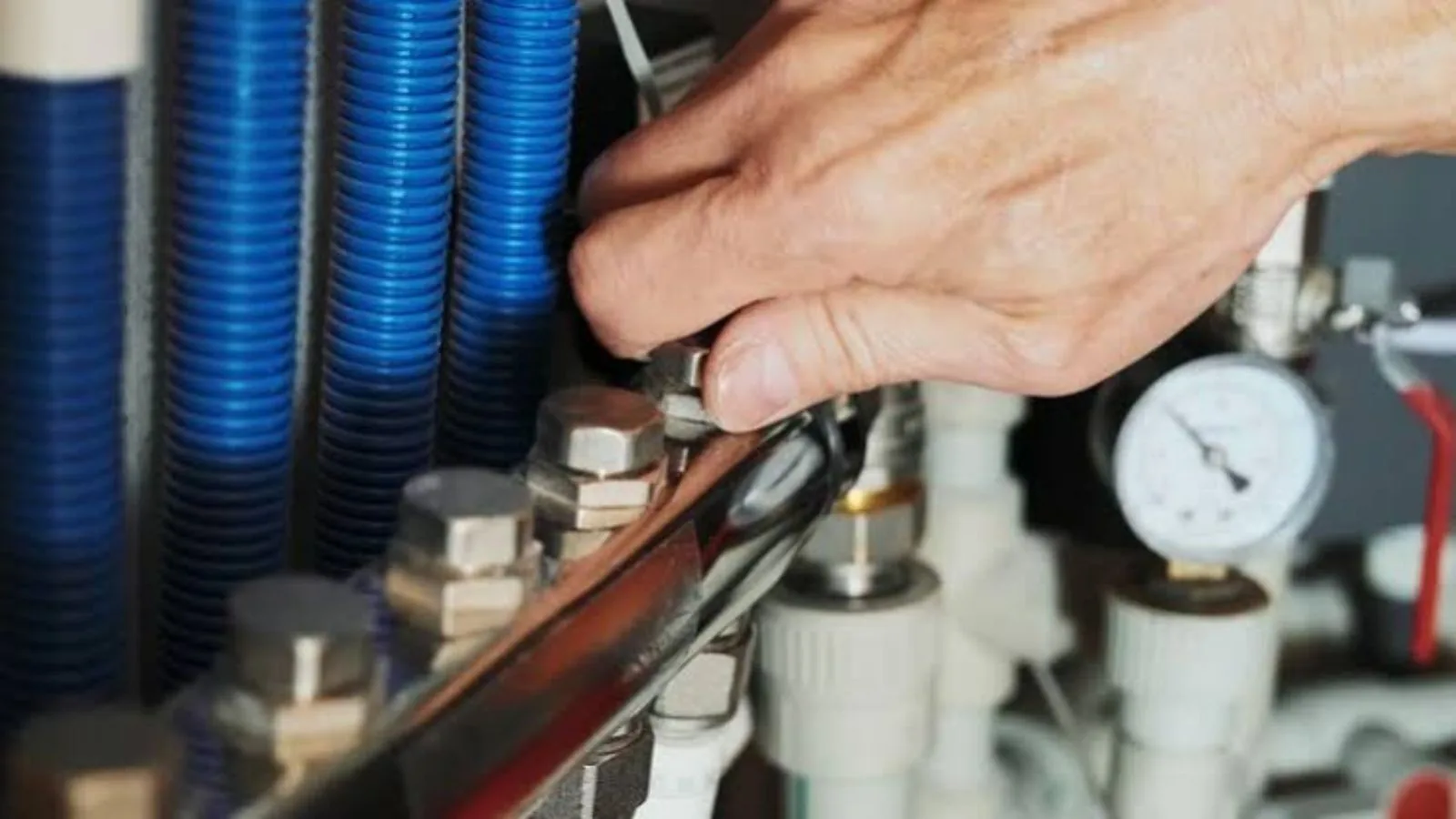
A leaking water heater is urgent because a full tank empties onto the floor and keeps feeding from the supply line. Our dispatch line runs 24/7. Shutting off the heater and its water supply is the first step.
Water heater leak cleanup is the removal and drying of water released by a failed tank, relief valve, fitting or drain line. It is separate from other appliance failures because the water is often hot and the volume can be large.
Water heater leak emergency steps
- Turn off power to an electric heater at the breaker, or set a gas unit to pilot or off. Only do this if the area around the breaker or control is dry.
- Close the cold water supply valve on top of the heater.
- Do not touch the tank if the water is hot. A scald risk exists.
- Open a hot water faucet to relieve pressure, and keep drain hoses clear.
- Photograph the heater, the label and the wet area, then call.
Why water heaters fail
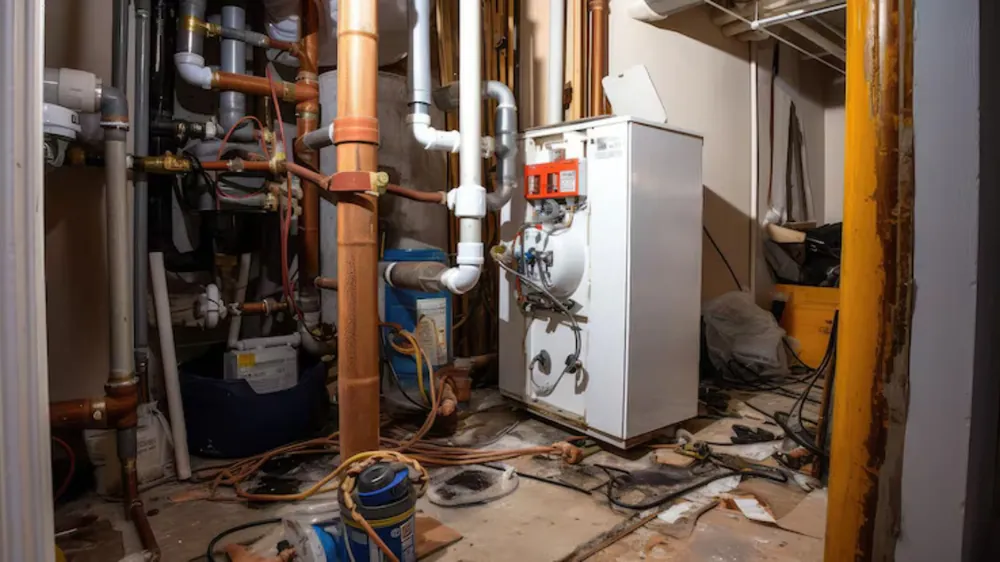
Tanks corrode from the inside, and the anode rod that slows that process wears out. Sediment builds on the bottom, fittings loosen and temperature and pressure relief valves can weep or discharge. A heater near the end of its life may leak slowly before it fails all at once.
The leak source decides the plan. A pinhole at a fitting is a small problem, while a split tank can release most of its contents in minutes.
| Source | Typical volume | Typical response |
|---|---|---|
| Supply or outlet fitting | Slow drip to steady flow | Shut off, repair, dry. |
| Relief valve discharge | Intermittent, can be large | Check pressure and valve, dry. |
| Drain valve | Slow | Replace valve, dry. |
| Tank failure | Large, fast | Replace heater, full extraction and drying. |
Where the water goes
In a garage the water spreads across concrete and into stored boxes. In a utility closet it reaches wall bottoms and adjacent carpet. In a basement it can reach finished walls, and in an upper floor installation it can reach the ceiling below.
Hot water adds one more problem: steam and warmth speed up the spread into drywall. We use moisture meters and thermal imaging to find the edge of the wet area rather than trusting what is visible.
Water heater flooding your floor?
Shut off the water and power, then call. A crew can start extraction right away.
Cleanup and drying
Extraction clears the standing water first, described on the water extraction page. Baseboards may be removed so the wall base can dry. Wet insulation, drywall at the bottom of the wall and carpet padding are evaluated against meter readings.
Air movers and dehumidifiers finish the job over several days. Our structural drying page explains the equipment.
Replace the heater and fix the cause
A plumber replaces or repairs the heater. Ask about a drain pan with a drain line, an expansion tank where appropriate and a leak sensor, because a small sensor can warn you before a slow leak becomes a flood. We do not install or sell water heaters.
If the leak ran for a long time before it was found, check for a musty smell. Hidden moisture under flooring or in a wall can grow mold, as the Missouri Department of Health and Senior Services notes for indoor water problems.
Insurance notes
A sudden tank failure is often treated differently from long-term corrosion or neglected maintenance. The Missouri Department of Commerce and Insurance reminds homeowners that insurance is not a home warranty and that maintenance remains the owner's job. Photograph the heater and its label before disposal, and ask your agent how your policy treats the loss.
Signs a tank is nearing the end
- Rust-colored water or rust at fittings.
- Rumbling or popping noises from sediment.
- Moisture around the base.
- Age beyond the manufacturer's expected life.
- Repeated pressure relief valve discharge.
Standards behind this work
ANSI/IICRC S500 is the published standard that guides how wet materials are assessed and dried after a leak like this. A tank leak is normally clean supply water at first, but water that has sat in insulation or flooring for days is treated more cautiously under that standard.
Questions Ballwin homeowners ask
Yes. The 24/7 line is open all hours. We cannot promise an arrival time, but we respond as quickly as possible and talk you through shutoffs first.
Yes, if it is safe. Turn off power or gas, close the cold supply valve and call. Do not touch hot water.
No. A plumber replaces the heater. We remove the water and dry and restore the building.
Often a few days, depending on how far the water spread and whether it reached walls or finished flooring.
Yes, if the moisture continues for days or weeks. Early drying prevents it. See our mold remediation page if you already see growth.