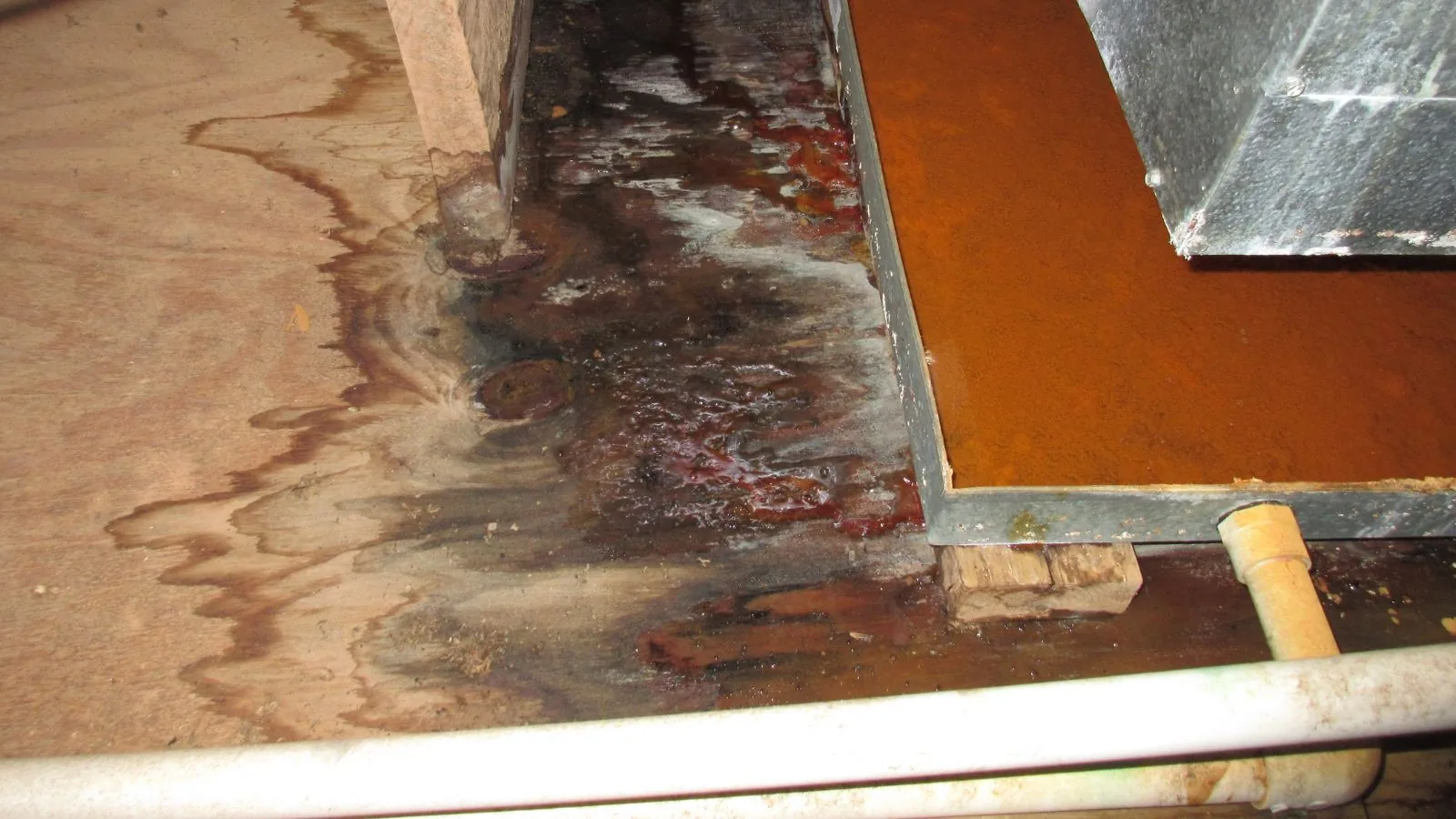
Drywall is paper and gypsum, and both absorb water easily. Water that touches the bottom of a wall travels upward and sideways inside the cavity. If water is still running, call our 24/7 line. For a stain or bubble, call to book an inspection.
Wall and drywall water damage repair is the drying and replacement of walls, baseboards and insulation after water exposure. Ceilings have their own page, and this page is about walls.
Signs that a wall is wet
- Bubbling, peeling or cracked paint.
- Soft or crumbling drywall.
- Brown stains or tide marks.
- Musty smell.
- Warped baseboards.
- Black spots or fuzzy growth on the surface.
What the wall hides
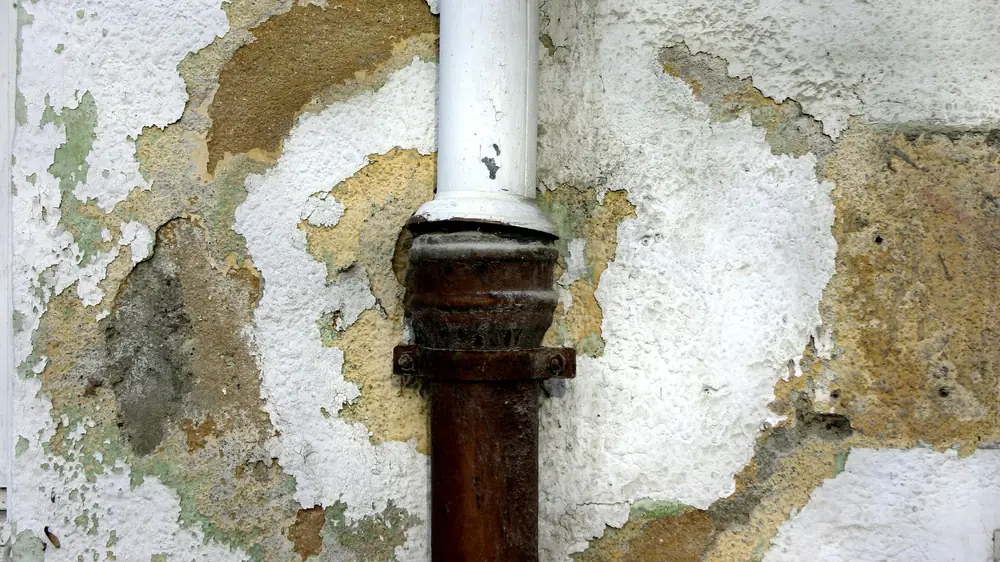
A wall has a front panel, a cavity with insulation and wiring, and a back panel. Water that enters the cavity can sit against insulation and framing for weeks. The surface may look dry while the inside is still wet.
We use moisture meters on the surface and thermal imaging to see cold wet zones. For hidden cases we may drill small holes or remove baseboards to check.
| Condition | Response |
|---|---|
| Wet but intact, clean water, caught fast | Dry in place with air movers and injection drying. |
| Stained or sagging | Cut out and replace the board. |
| Wet insulation | Remove, then dry the cavity. |
| Baseboards swollen | Remove and replace. |
| Visible mold | Contain and remove, see mold page. |
Wall wet or stained?
Call and describe it. We will book an inspection.
How we repair a wall
- Stop the source and extract water.
- Remove baseboards and trim.
- Cut out wet drywall about a foot or more above the wet line.
- Remove wet insulation.
- Dry the framing and cavity until readings match the reference.
- Hang new drywall, tape, texture, prime and paint.
Matching texture and paint takes care. We explain in advance whether a whole wall or room should be repainted so the repair does not show.
Remodeling and gutted walls
Sometimes a leak is found when a wall is opened during remodeling. If moisture or mold is discovered, stop and call. Our drying process can be done before the new drywall goes up.
Mold behind walls
The back of drywall and the paper on gypsum are food for mold. The Missouri Department of Health and Senior Services says indoor mold growth signals a water problem and that the fix is moisture control. If you see growth, read our mold remediation page.
Floors near the wall may also be wet. See carpet water damage if you have carpet.
Insurance notes
The Missouri Department of Commerce and Insurance advises homeowners to document damage and keep receipts. Sudden leaks are often addressed under homeowners policies, while gradual seepage may be excluded. Ask your agent.
Repair details that people notice
The finish is what you see every day. A patch that does not match in texture or paint sheen is an eyesore. We discuss options early, such as repainting the whole wall corner to corner rather than blending a small patch.
Baseboards and trim are removed with care so they can be reinstalled when possible. Older trim may be hard to match, and replacing a whole run of baseboard sometimes looks better than mixing old and new.
| Step | Purpose |
|---|---|
| Moisture check | Define the wet area. |
| Demolition | Remove wet board and insulation. |
| Drying | Reach target readings. |
| Drywall hang and tape | Restore the surface. |
| Texture and prime | Match the existing finish. |
| Paint | Finish the wall. |
Standards behind this work
The EPA advises drying wet materials within 24 to 48 hours to limit mold. ANSI/IICRC S500 guides how we decide between drying a wall in place and cutting it open.
What to do before we arrive
- Stop the water source if you can do so safely.
- Do not poke holes in a bulging ceiling or wall unless the water is dripping and a bucket is ready.
- Move furniture away from wet walls and take photos of the stains.
- Do not paint over stains until a moisture reading says the wall is dry.
Questions Ballwin homeowners ask
If water is actively leaking, call the 24/7 line. Otherwise book an inspection. We cannot promise an arrival time.
Sometimes if the water was clean and the wall is ventilated, but cavities and insulation rarely dry without help.
Above the wet line as shown by moisture readings, often a foot or more.
Texture and paint can be matched with care. We explain what to expect first.
Usually yes. Moisture is a common cause of bubbling paint.