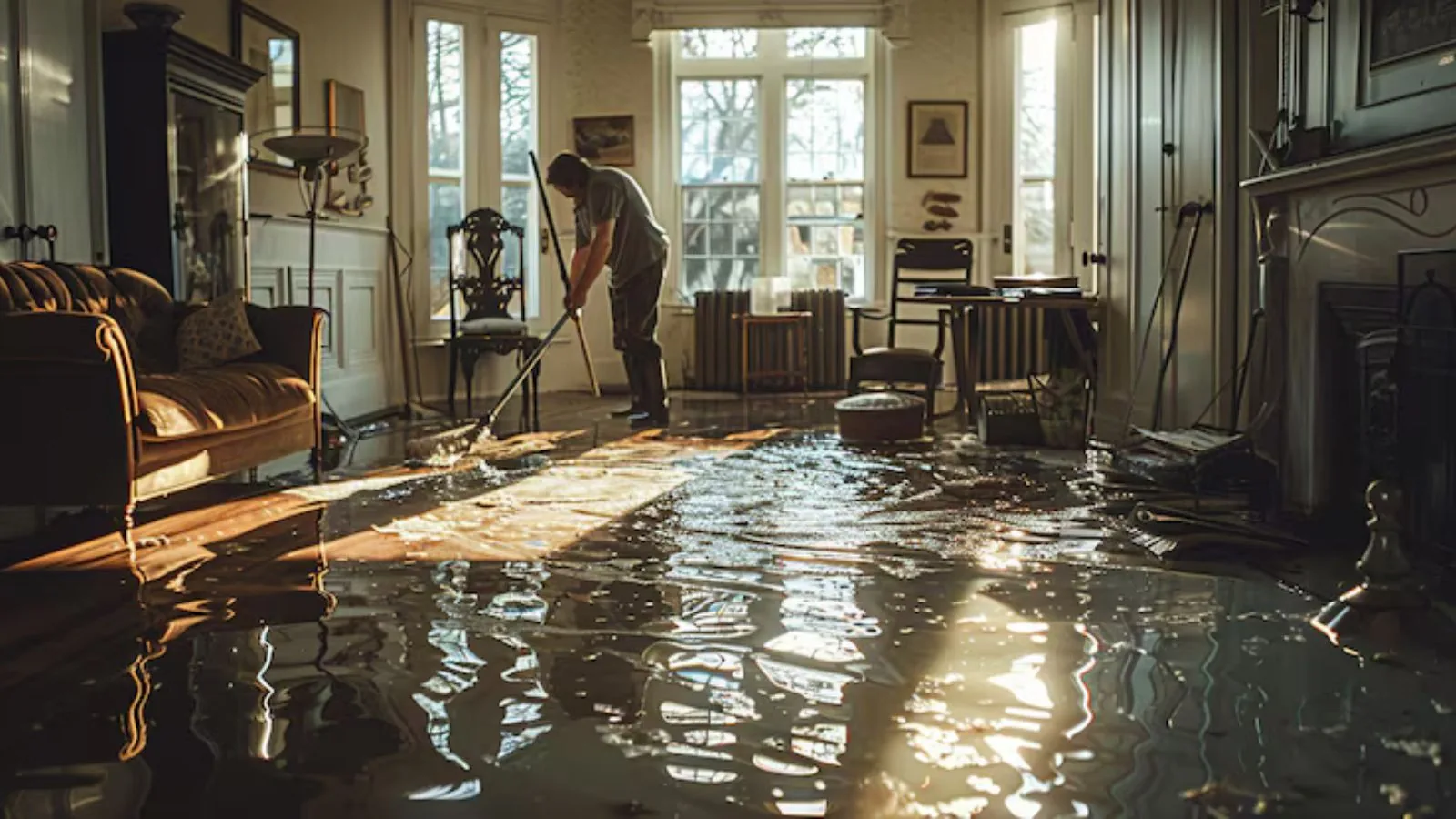
Standing water is an emergency because it does not stay on the surface. Within hours it wicks into baseboards, carpet pad, subfloor and the bottom of drywall. Our dispatch line is open 24/7, and the steps below are what you can safely do while you wait for a crew.
Water extraction means physically removing liquid water with pumps and vacuums before any drying equipment is set. It is the first job in water damage restoration in Ballwin, MO, and it decides how much material can be saved.
When standing water is an emergency
Any water deeper than a film across a floor is worth a call, and water that is still arriving is urgent. Ceiling drips, a failed supply line, a backed up drain, a sump pit that quit, or a rain event that pushed water under a door all create the same race against time. The longer the water sits, the more of the building absorbs it.
Call at night, on a weekend or on a holiday. Water does not wait for business hours, and neither does our line. We cannot promise an arrival time, but we will tell you honestly what to expect when you call.
While you wait for the crew
- Stop the source if it is safe, such as the shutoff valve at a fixture or the main water valve.
- Turn off power to wet areas only if you can reach the panel while standing on a dry surface. If water is near outlets, a panel or appliances, stay out and call your electric utility or 911 first.
- Lift small furniture, rugs and electronics out of the water, and photograph everything for your claim before you move it.
- Keep children and pets out. If the water came from a sewer or a drain, do not touch it.
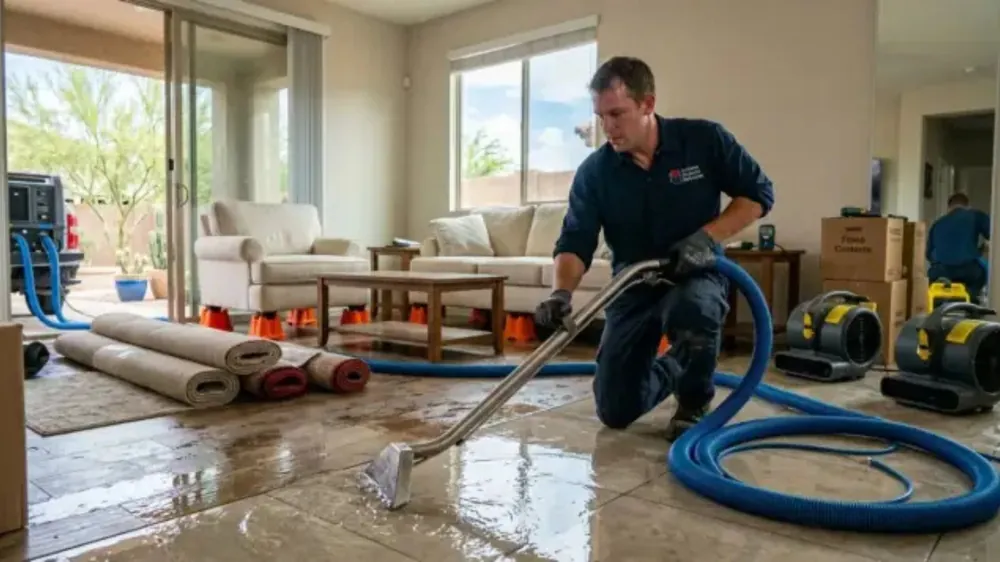
How water extraction works
A crew starts by finding the source and the edges of the wet area. Moisture meters and a thermal camera show where water traveled beyond the visible puddle, which matters because a living room spill often runs under a wall into the next room.
Extraction then moves in passes. Submersible pumps clear deep water. Portable and truck-mounted extractors pull water from carpet and pad. Weighted floor tools press water out of fibers on hard surfaces. Each pass is followed by a meter reading so the crew knows what is still holding water.
| Situation | Typical method | What it protects |
|---|---|---|
| More than a few inches of standing water | Submersible pump, then wet vacuum | Subfloor, wall bottoms, contents. |
| Soaked carpet and pad | Weighted extraction wand, then pad lift if needed | Carpet backing and tack strips. |
| Hardwood or laminate with surface water | Squeegee and hard floor extraction tools | Boards before cupping begins. |
| Water trapped under cabinets or in wall bays | Targeted holes, injection drying lines, extraction | Cabinets and insulation. |
The right method depends on what the water reached, not on how much is visible.
What gets removed and what gets saved
Clean supply line water caught quickly often lets carpet and pad stay in place if they dry. Water that sat for a day or more, or water that came from a drain, changes the call. Porous materials that touched contaminated water are usually removed, because they cannot be cleaned reliably.
We separate the decision into three parts: what can be extracted and dried in place, what must be cut out, and what should be boxed and moved. We explain the scope and how the price is set before the work starts, so you can decide with your insurer.
Water still standing in your home?
Call now and describe what you see. We will tell you what to do while the crew is on the way.
After extraction: the drying plan
Extraction removes liquid water, but the building still holds moisture in framing, subfloor and drywall. That is why extraction is followed by structural drying with air movers and LGR dehumidifiers. Skipping this step is how a dry-looking room ends up with a musty smell and mold two weeks later.
The Missouri Department of Health and Senior Services advises drying wet items within 24 to 48 hours to keep mold from taking hold. A fast extraction is what makes that window realistic.
Where the water in Ballwin comes from
Calls from Ballwin homes tend to follow a few patterns. Spring storms bring the heaviest rain, and the St. Louis climate normals list May at 4.82 inches, April at 4.73 and June at 4.49. Winter cold snaps cause pipe failures, and older water heaters and washing machine hoses fail all year. If the water came from a river or heavy surface runoff, see our flood damage restoration page.
Homes along Manchester Road, around Vlasis Park and in the subdivisions off New Ballwin Road all have different layouts, but the first hour works the same way everywhere. Stop the source, protect yourself, document, and call.
Insurance and documentation
Missouri Department of Commerce and Insurance guidance is to document damage and take photos before making temporary repairs, and to keep receipts for emergency work. A sudden pipe or appliance failure is the kind of loss many homeowners policies address, while flood damage typically needs separate flood coverage. Read your own policy or ask your agent, because we cannot tell you what it covers.
We keep moisture logs and photos as we work, which gives your adjuster a clear record of what was wet and what was done.
Standards behind this work
The published industry standard for professional water damage work is ANSI/IICRC S500. It sorts water into three categories by contamination and into four classes by how much material is wet, and those two labels decide what gets removed and how long drying runs. We cite it as a reference for how the work is planned, not as a claim about any firm.
Questions Ballwin homeowners ask
Yes. The line is staffed 24/7, including weekends and holidays. We cannot guarantee an arrival time, but we will dispatch as quickly as we can and tell you what to do in the meantime.
As fast as possible. Water begins moving into porous materials within the first hours, and the Missouri Department of Health and Senior Services recommends drying within 24 to 48 hours to limit mold.
Yes. Basements are common extraction jobs. Pumps clear the water, extractors pull it from carpet, and then the walls and floor are dried. See our basement water damage page for the details.
Extraction is the first stage. Restoration also covers drying, removal of materials that cannot be saved and repair. Our water damage restoration overview explains the full sequence.
We explain the scope and how the price is set before work begins. The final scope depends on what the meters show, so we avoid quoting numbers without seeing the water.