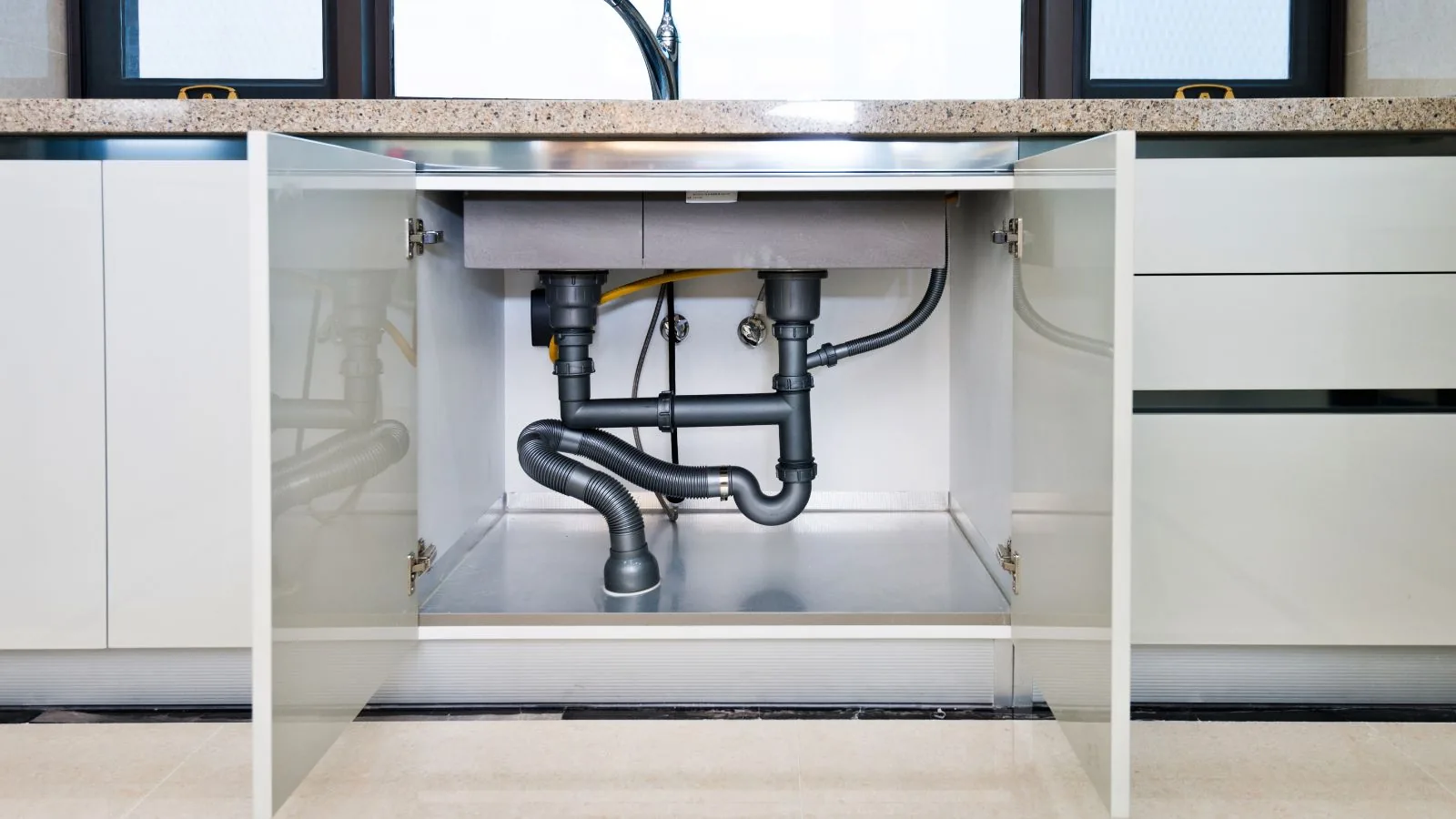
A kitchen leak often hides inside cabinets, behind the dishwasher or under the floor. Close the valve under the sink and call. If water is flowing, call our 24/7 line.
Kitchen water damage restoration is the drying and repair of a kitchen after leaks from sinks, dishwashers, refrigerators or supply lines. It is separated from the appliance page by the room and the materials involved, such as cabinets, countertops and flooring.
What kitchen leaks look like
- Swollen or soft cabinet bottoms.
- Warped or lifting flooring near the sink or dishwasher.
- Musty smell under the sink.
- Stains on the ceiling in the room below.
- Black spots on the back of cabinet panels.
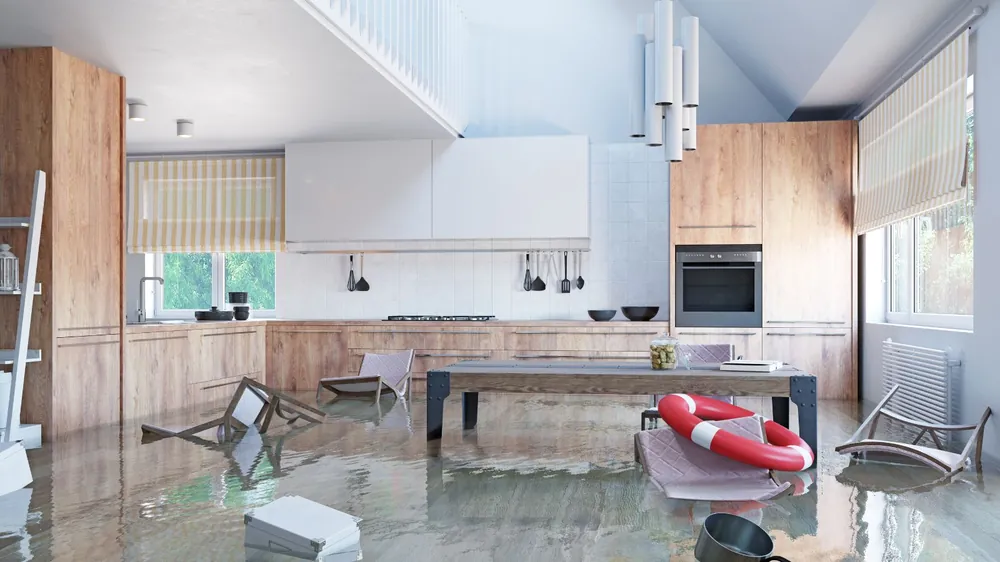
Kitchen materials and water
| Material | Water reaction | Usual response |
|---|---|---|
| Particleboard cabinets | Swell and fall apart | Often replaced. |
| Plywood and solid wood cabinets | Can dry if treated quickly | Dried in place when possible. |
| Laminate flooring | Swells at seams | Usually replaced. |
| Tile and grout | Water goes through grout | Check subfloor beneath. |
| Drywall behind cabinets | Holds moisture unseen | Meter readings, cut if wet. |
Drying cabinets and floors
Toe-kicks are removed to let air reach the cabinet base. Holes are drilled in discreet locations to push dry air into cavities. A thermal camera maps where moisture traveled under the floor.
We try to save cabinets that can be saved, and we tell you honestly when a particleboard base has swollen past recovery.
Kitchen water damage?
Call to book an inspection or report an active leak.
Source repair
A plumber repairs the sink or supply line and an appliance technician repairs the dishwasher or refrigerator. Our job is the water they leave behind. For failures of the appliance itself, see our appliance leak page.
Mold under the sink
A slow leak under a sink can grow mold in cabinet panels within days of staying wet. The Missouri Department of Health and Senior Services says to fix the water problem and dry materials within 24 to 48 hours. If growth is already visible, see our mold remediation page.
Callers often describe a leak under a bathroom or kitchen sink that went unnoticed for weeks. The earlier the call, the more can be saved.
Hardwood and tile floors
Kitchen floors often continue into dining rooms and hallways, so water can travel beyond the kitchen. Wood floors need quick drying, as explained on the hardwood floor page.
Insurance notes
Missouri DCI says to document damage and take photos before temporary repairs. A sudden pipe or appliance failure is treated differently from a slow leak that went unaddressed. Ask your agent about your policy.
Kitchen layout and where water travels
In many kitchens, the sink, dishwasher and refrigerator share a wall or run along the same floor. Water from one spot can run beneath cabinets to another. The cabinet base is a pocket where moisture stays long after the surface looks dry.
We remove toe-kicks and open a few access points so air can move through. Where particleboard has swollen, we explain which units can be dried and which should be replaced.
Countertops and backsplashes
Stone and laminate tops are not usually damaged by a leak underneath, but they may need to be lifted if the cabinet base must be replaced. Plan with your kitchen contractor so the sequence works.
Cleaning and odors
After drying, we clean hard surfaces and check for lingering odor. A musty smell after a few days means moisture may remain somewhere, and we recheck rather than mask it.
Dishwasher and disposal lines are often involved, so the plumber should test the connections before the cabinet is closed up again.
| Item | Why |
|---|---|
| Shut off valves under the sink | Confirm they work and do not drip. |
| Check dishwasher gasket and hose | Common slow leak points. |
| Check refrigerator water line | Often hidden behind the unit. |
| Check flooring seams | Water travels at seams. |
| Check ceiling below | Upper-floor kitchens leak downward. |
Standards behind this work
ANSI/IICRC S500 is the published standard behind how cabinets, subfloor and walls are assessed after a kitchen leak. The EPA advice to dry wet materials within 24 to 48 hours explains why cabinet kick plates and toe space are checked early.
What to do before we arrive
- Shut off the water supply to the sink, dishwasher or refrigerator.
- Turn off power to the kitchen if water is near outlets or the range.
- Empty the lower cabinets and photograph the damage.
- Do not run the dishwasher or disposal again until the source is fixed.
Questions Ballwin homeowners ask
If water is actively flowing, call the 24/7 line. Slower leaks can be handled by inspection. We cannot promise an arrival time.
Sometimes. Solid wood and plywood often can. Particleboard that has swollen usually cannot.
Warped boards, soft spots or a moisture meter reading will tell you. A technician can check.
We handle water damage and drying, and we can help scope the rebuild. A kitchen contractor does cabinets and countertops.
Yes. Early drying costs less than replacing cabinets and floors.