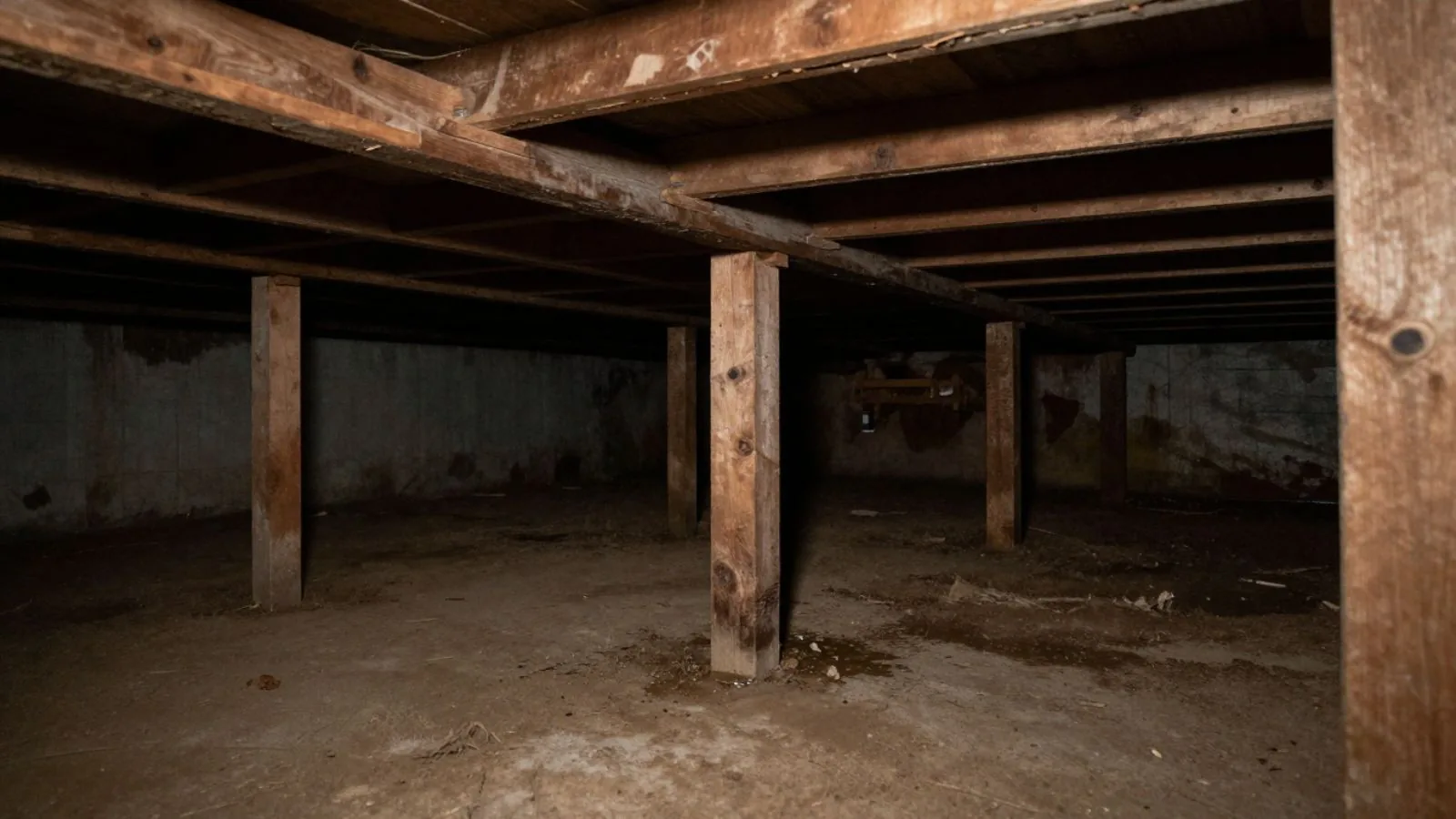
Water under a house is easy to ignore because nobody sees it, but the floor structure above can absorb moisture for months. If you see standing water, call our 24/7 line. If it is only damp or musty, we can book an inspection.
Crawl space water damage is the removal of water, wet insulation and damaged materials from the under-floor void, followed by drying the joists and subfloor. It is not a waterproofing service.
When a crawl space is an emergency
Active flowing water, a pooled depth that reaches insulation, a smell of sewage or any sign of electrical risk calls for an immediate call. Stay out of the space if water touches wiring.
Dampness, condensation and high humidity are less urgent but still worth attention. Moist air and wet wood are the conditions mold needs.
| Source | Sign | Who fixes the cause |
|---|---|---|
| Plumbing leak | Dripping pipe, wet joists below a bathroom | Plumber. |
| Surface runoff entering vents or door | Water after rain | Grading and drainage contractor. |
| Groundwater seepage | Water after wet periods | Waterproofing contractor. |
| Humid air condensing | Sweating ducts, damp insulation | Vapor barrier or HVAC contractor. |
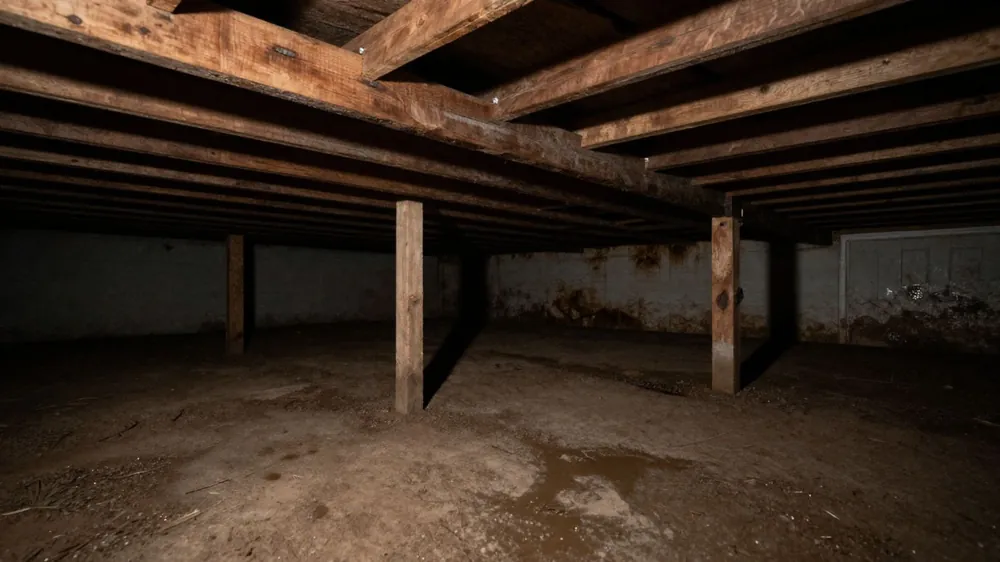
What we do in a crawl space
- Pump or extract standing water.
- Remove wet insulation that has dropped or lost its value.
- Inspect joists, subfloor and sill plates with moisture meters.
- Place air movers and dehumidifiers to dry the wood.
- Document readings so you can see progress.
Crawl spaces are cramped and often have limited access, which affects equipment and labor. We explain access and scope before we start.
Water or dampness under the house?
Call to describe what you see. We will tell you whether it is urgent.
Restoration is not waterproofing
We remove and dry what water damaged, but we do not install drainage systems, sump pumps, encapsulation or foundation repairs. If the same water returns after every storm, you need a waterproofing contractor as well. A caller asking about foundation fixes should hear that plainly, and we say it.
Regional rain data helps explain why. The NWS 1991 to 2020 normals for St. Louis show 41.70 inches of precipitation per year, with the heaviest months in spring. A space that takes on water during those months likely has a drainage problem.
Mold and odor
A musty smell is a sign of moisture. The Missouri Department of Health and Senior Services says mold grows where moisture and food, such as wood, are present, and that the fix is moisture control. If growth is present on joists or subfloor, see our mold remediation page.
A vapor barrier on the ground and tight vents can reduce humidity, but the right choice depends on your building. A building department can advise on local code.
Insurance notes
Groundwater seepage and surface flooding are typically excluded from standard homeowners policies, while a sudden plumbing failure may be covered. Missouri DCI says flood damage requires separate coverage. Read your policy and ask your agent. Photograph the space before cleanup begins.
Working safely in a crawl space
Crawl spaces are confined. They can hold standing water, wiring, pests and poor air. We check for electrical hazards before entering, wear protective gear and limit time in the space. If you see water near wiring, do not go in yourself.
Carbon monoxide risk rises when fuel-powered pumps run in an enclosed space, so we use electric equipment.
Insulation and vapor barriers
Fiberglass batts that have gotten wet sag and hold water against the floor above. Removing them helps the joists dry. A ground vapor barrier, where present, may have been displaced by water and needs to be checked.
Whether to install a new barrier, add vents or encapsulate the space is a building decision. A contractor in that trade can advise, and the building department can tell you what code applies.
Questions Ballwin homeowners ask
If water is deep or flowing, call the 24/7 line. Damp but stable conditions can wait for an inspection. We cannot promise an arrival time.
No. We clean up and dry water damage. A waterproofing contractor handles drainage, sump pumps and encapsulation.
It signals moisture, which can lead to mold. The Missouri Department of Health and Senior Services recommends controlling the moisture first.
Often yes. Wet insulation stays wet and holds moisture against the wood.
Yes. Moisture can wick into joists and subfloor and cause rot or mold if it persists.