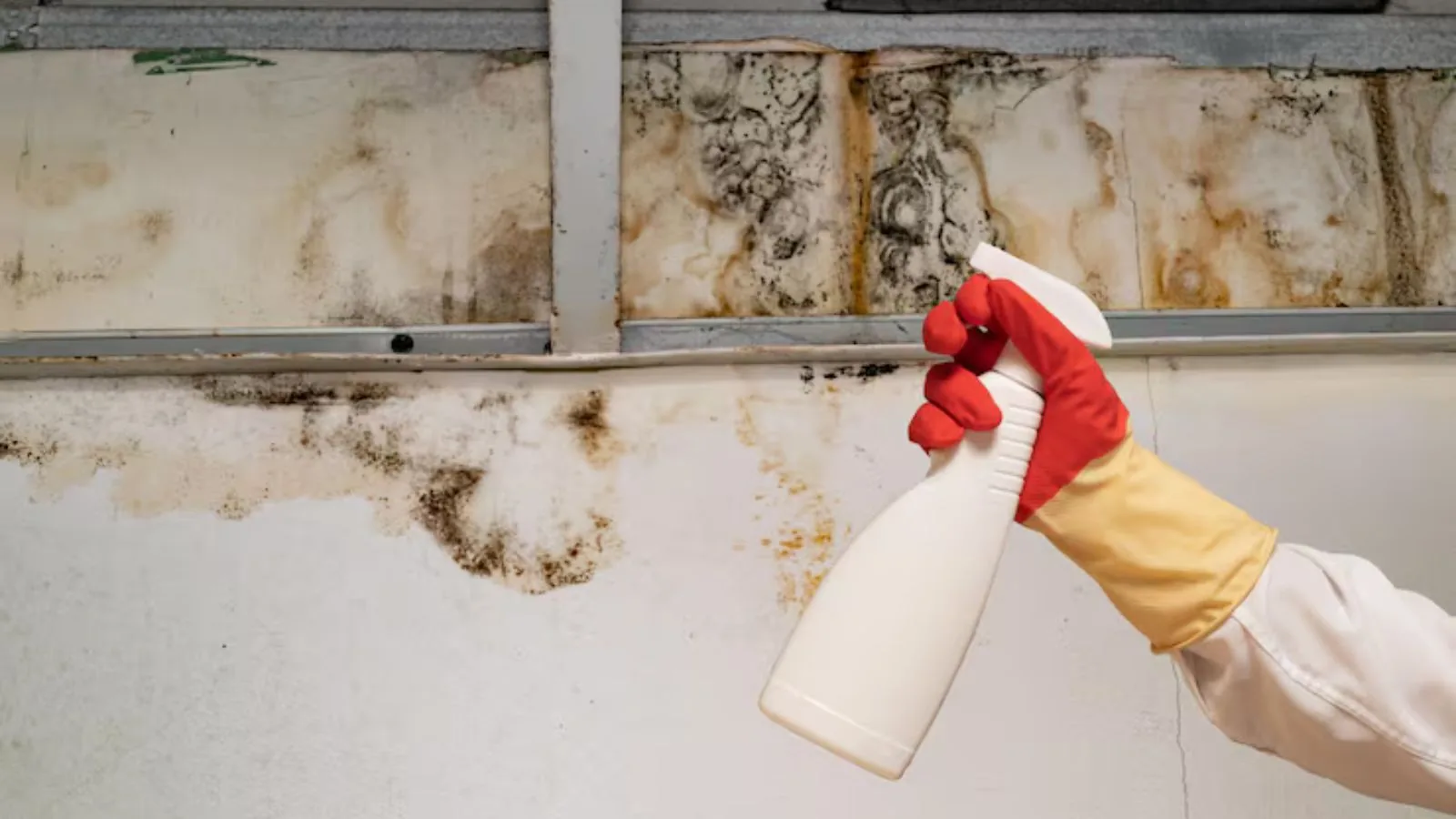
Mold usually follows a water problem. A leak under a sink, a condensation line, a roof leak or a flooded basement creates the damp conditions it needs. Call to book an inspection, and if water is still arriving, call the 24/7 line.
Mold remediation is the containment and removal of mold growth and mold-damaged materials after the moisture source is fixed, performed according to industry practice such as ANSI/IICRC S520, which we cite as a published standard.
What mold needs
The Missouri Department of Health and Senior Services says mold grows where there is moisture and food, such as wood, paper or drywall, and that indoors it is a symptom of a water problem. Controlling moisture is the core of any mold plan.
If the moisture source is not fixed, cleaned mold returns. That is why we ask about the leak first.
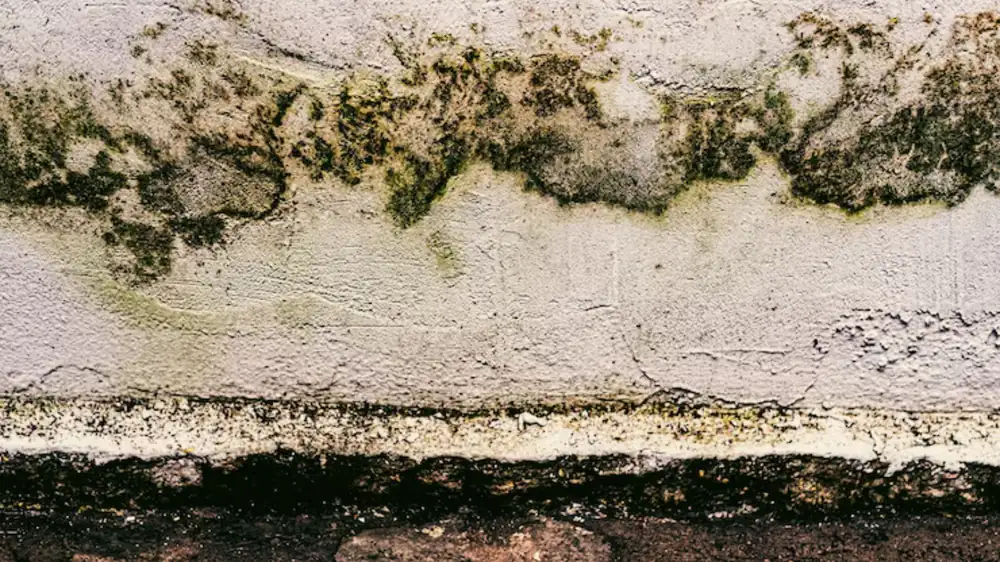
Where mold shows up
| Location | Typical source | Notes |
|---|---|---|
| Closet walls and ceilings | Upstairs toilet, roof or condensate leaks | Furniture hides growth. |
| Under sinks | Supply or drain leaks | Cabinets and baseboards. |
| Basement walls and stairs | Seepage, humidity | Odor is often the first sign. |
| Behind carpet | Pad stayed wet | Seen when edges are lifted. |
| Attic and ceiling edges | Roof leak or AC condensate | Back of drywall. |
How remediation works
- Inspect and find the moisture source.
- Stop the water and dry the structure.
- Set up containment with plastic barriers and negative air where needed.
- Run HEPA air filtration.
- Remove mold-damaged porous materials such as drywall and insulation.
- Clean and HEPA-vacuum remaining surfaces.
- Verify the area is dry and visibly clean.
Scrubbing without containment can spread spores. Small areas of surface mold on hard materials can sometimes be cleaned by the homeowner with detergent and water, as the Missouri Department of Health and Senior Services describes, using a respirator, gloves and goggles. Larger or hidden growth should be handled by professionals.
Mold in your home?
Call to book an inspection. We will ask about the leak and explain what comes next.
Mold inspection, testing and clearance
Callers ask whether they need testing. The Missouri Department of Health and Senior Services says that in most cases, if visible growth is present, sampling is unnecessary, that sampling does not assess health risk, and that no federal or Missouri limits for mold exposure exist. Testing is not standardized.
There are still reasons to test. A buyer's lender, an insurer or a condominium board may ask for independent clearance testing after remediation. The tester should be independent from the contractor. We explain the process, and we cannot promise what a lender will accept.
Mold for a home sale or loan
Sometimes a sale is held up because a lender wants mold removed first. In that case, remediation is followed by a written record of the work and, if required, an independent clearance report. Ask your lender or agent what documentation they need before work begins.
We help with the work and the records. We do not issue clearance ourselves and we do not guarantee outcomes with third parties.
Health
We do not give medical advice. The Missouri Department of Health and Senior Services notes that airborne mold spores are a common allergen and that excessive exposure can worsen asthma symptoms. Anyone with symptoms should contact a health care provider.
Insurance notes
Mold coverage differs by policy and cause. Missouri DCI recommends reading your policy and documenting damage. Ask your agent whether the water source and the resulting mold are covered. For the water side, see burst pipe damage or AC leak damage, depending on the source.
Questions Ballwin homeowners ask
Not always. Missouri DHSS says sampling is often unnecessary when growth is visible. Testing may be requested by a lender, insurer or board.
Missouri DHSS says there is no conclusive evidence linking indoor mold to illness beyond allergy-type symptoms and that cleanup methods are the same regardless of mold type.
Missouri DHSS describes a one part bleach to ten parts water solution for hard surfaces and warns against mixing it with other cleaners. Porous materials usually need removal.
Complete remediation, then ask your lender or agent what report is required. An independent tester usually provides it.
Mold itself is rarely an emergency, but if water is still flowing call the 24/7 line. Otherwise book an inspection.