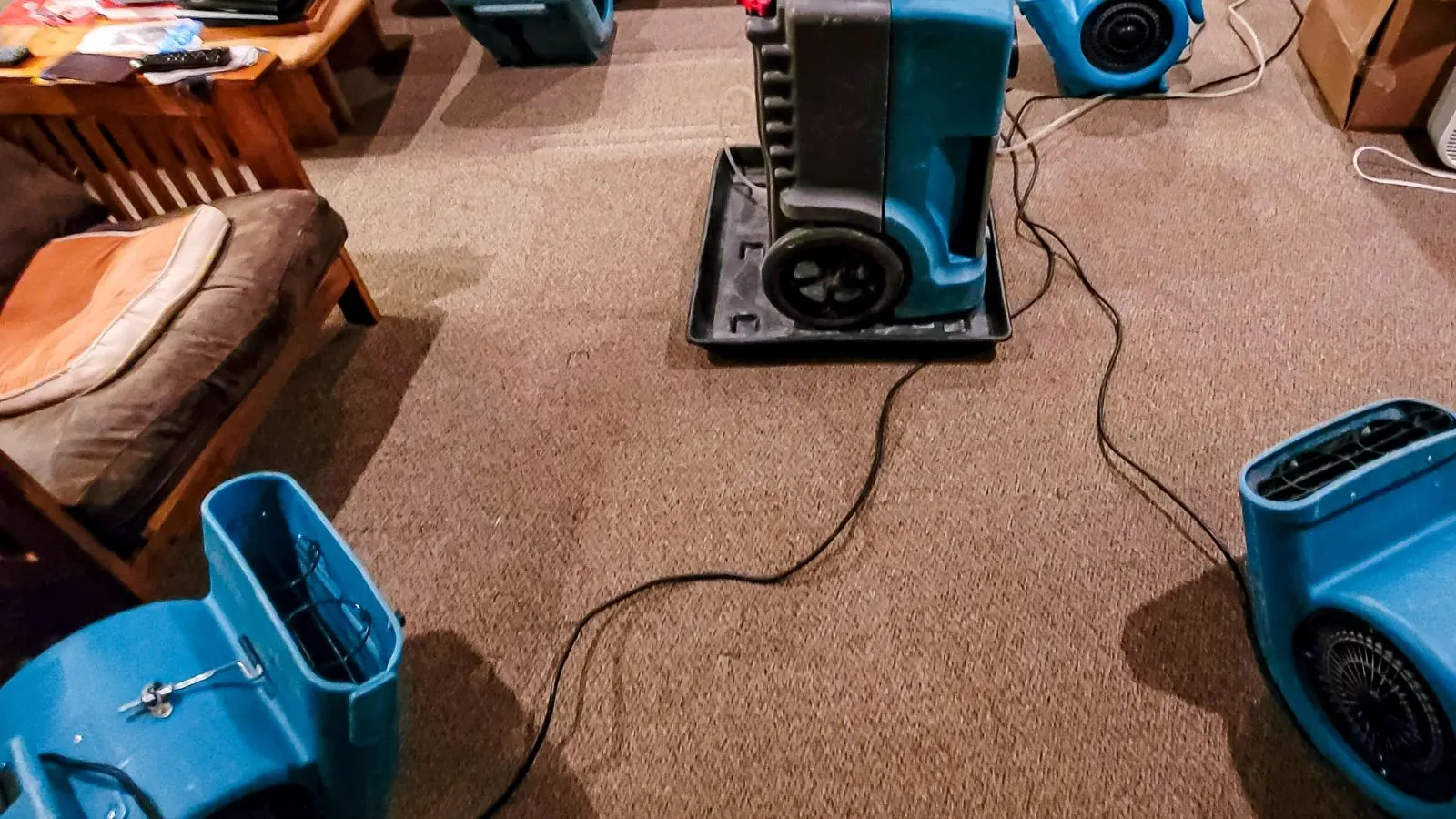
Drying is the part of water damage restoration that people can't see, and it is the part that prevents mold. Structural drying is the use of air movers, dehumidifiers and monitoring to bring wet building materials back to normal moisture levels.
This page covers the drying process, equipment and timeline. If water is still standing, start with water extraction.
What structural drying does
Wood, drywall, concrete and insulation absorb water and release it slowly. Air movers push dry air across surfaces, dehumidifiers pull moisture out of the air, and the cycle repeats until the materials are dry. Warm air holds more moisture, so controlling temperature also speeds the process.
Water mitigation is the umbrella term used by insurers for the early steps that stop the damage from growing. Drying is its core activity.
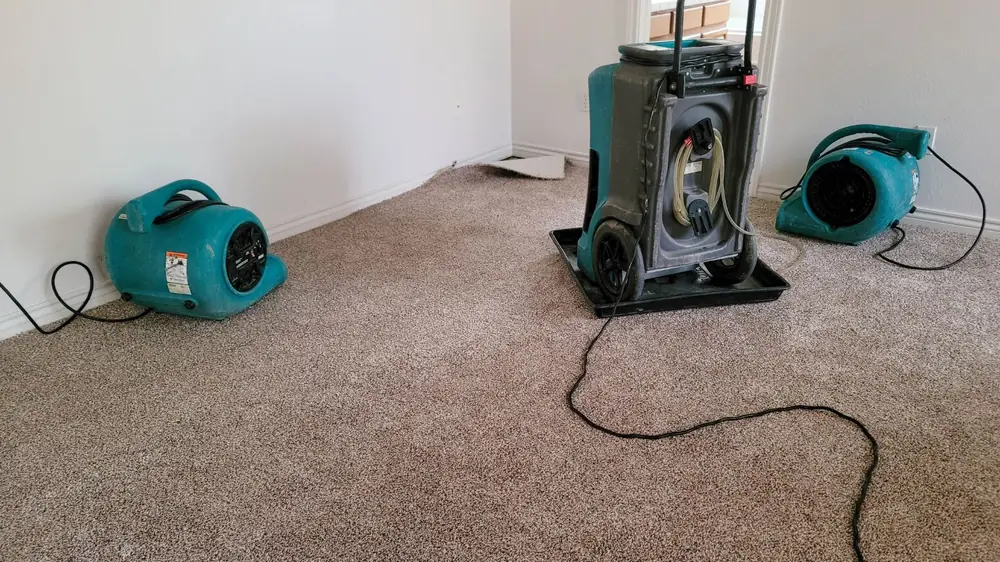
The equipment
| Tool | Purpose | Where it goes |
|---|---|---|
| Moisture meter | Reads moisture content in wood and drywall | Walls, floors, baseboards. |
| Thermal camera | Shows temperature differences from wet areas | Ceilings, walls, floors. |
| Air mover | Moves air across wet surfaces | Floors and wall bases. |
| LGR dehumidifier | Removes moisture from air at high humidity | Central in the affected space. |
| Injection drying system | Pushes air into wall cavities and under cabinets | Inside closed cavities. |
| Hygrometer | Tracks room humidity and temperature | Placed through the area. |
How drying is monitored
We start by taking readings from dry reference materials in an unaffected part of the building. That gives a target. Then we place equipment and check daily, removing or moving it as materials reach the target.
Drying is complete when readings match the reference, not when a room feels dry. Cutting this step short is a common reason mold grows after a loss.
Need a drying plan?
Call and describe what got wet. We will tell you how we would approach it.
How long does drying take?
Many jobs take several days, but the range depends on the material, the amount of water, humidity and how much air moves through the area. Concrete and thick hardwood take longer than carpet or drywall. Winter conditions in Ballwin, where the NWS January average high is 40.4 degrees, slow evaporation, so we use heated dehumidification to compensate.
The Missouri Department of Health and Senior Services recommends drying wet items within 24 to 48 hours. That is a target for starting the process, and larger losses take longer to finish.
Renting air movers or drying yourself
Homeowners sometimes ask about renting fans and dehumidifiers. A small spill on a hard surface may dry with household fans, but hidden moisture in walls and floors is difficult to measure without meters. We do not rent equipment, and we explain scope before beginning a job.
If you try to dry a space yourself, keep doors closed, run a dehumidifier and watch for odor or discoloration. Call if the smell or stains get worse.
What happens if drying is skipped
- Wood framing can swell, warp or decay.
- Drywall paper can feed mold.
- Flooring can cup, buckle or stain.
- Odors linger.
- Resale and insurance problems may follow if moisture was never documented.
If you already see growth, our mold remediation page explains the next step. For wet floors, see hardwood floor water damage and carpet water damage.
Documentation
We keep daily moisture logs and photos. Missouri DCI encourages homeowners to document damage for claims. A written drying record shows the insurer what was wet and what was done.
Drying by material
| Material | Typical drying method |
|---|---|
| Carpet | Air movers over the surface, pad usually removed. |
| Drywall | Air movers, injection drying, or removal if damaged. |
| Hardwood | Controlled drying with attention to cupping. |
| Concrete | Dehumidification and time. |
| Wood framing | Air movement and dehumidification, moisture monitored. |
We adjust the plan as readings change, and we explain why equipment is moved.
Standards behind this work
ANSI/IICRC S500 defines the drying goal as returning materials to a dry standard set from an unaffected reference reading. That is why we log moisture readings each visit and why equipment stays until the numbers say it can leave.
What to do before we arrive
- Keep doors and windows closed so the room can be conditioned.
- Do not turn off equipment once it is set, because that restarts the drying clock.
- Keep children and pets away from cords and hoses.
- Report any new damp spots or smells to us right away.
Drying in Westglen Woods
For leaks from appliances and water heaters in a subdivision like Westglen Woods, see our page on water damage restoration in Westglen Woods.
Drying questions from Ballwin homeowners
Usually several days. It depends on the materials and the amount of water. Readings tell us when it is finished.
No. We do drying as part of restoration work with our own equipment.
Mitigation is the early work that stops damage from growing, including extraction and drying. Drying is a core part.
Fans help on small surface spills, but they do not remove moisture from the air or measure hidden wetness.
No. Drying removes moisture from a wet building. Waterproofing prevents water from entering. A contractor in that trade handles it.