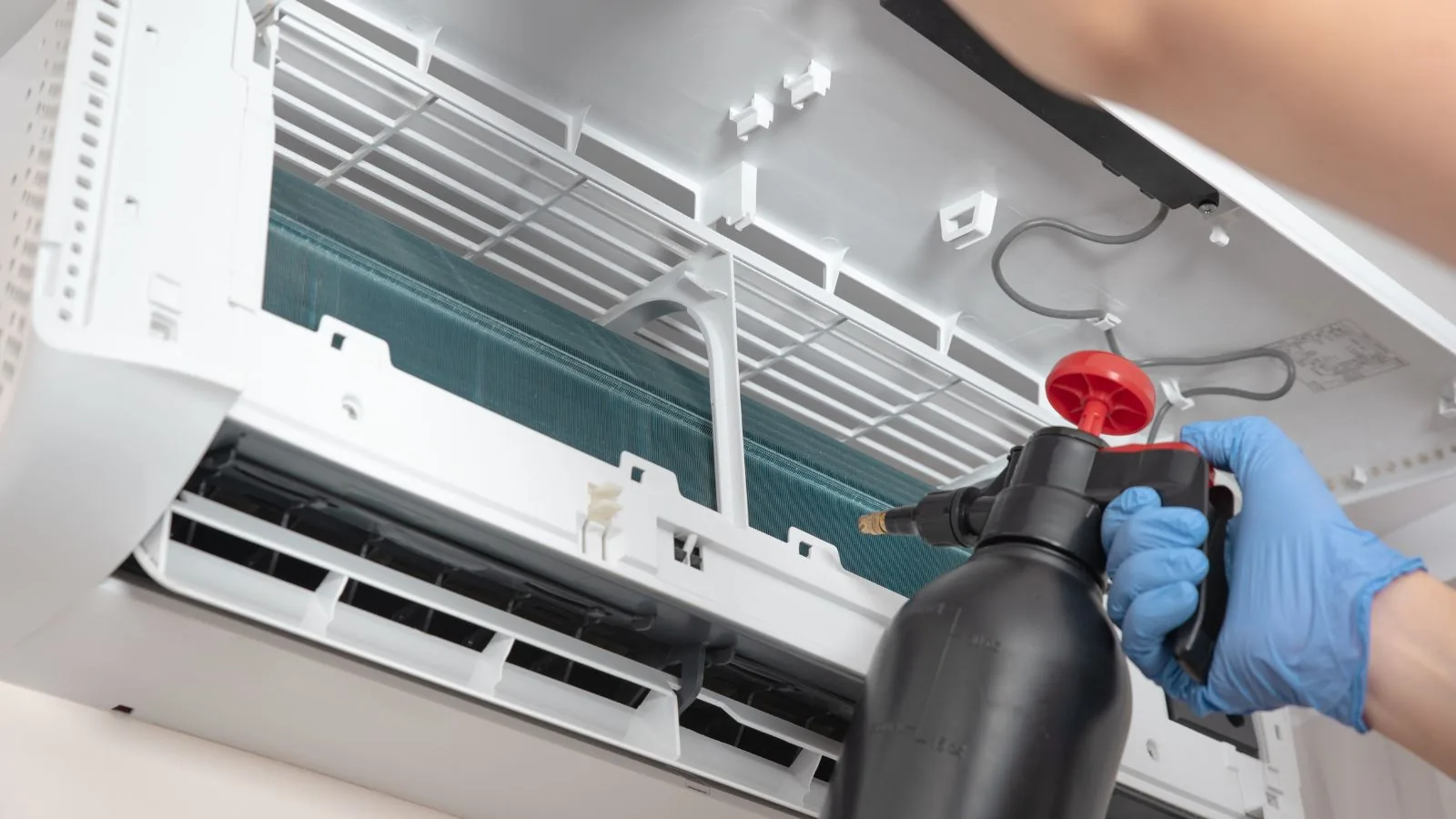
An air conditioner leak is usually slow, so the damage is often found late. Look for a stain on a ceiling, a damp closet wall or a drip near an air handler. If water is actively dripping, turn the system off and call our line, which is open 24/7.
AC leak water damage is moisture damage caused by condensate that cannot drain, a cracked drain pan, a frozen coil that melts or a failed pump. It is separated from other leaks by the source: the HVAC system.
How an air conditioner makes water
Cooling air removes humidity, and that moisture collects on the evaporator coil and runs into a drain pan and a condensate line. If algae and debris clog the line, the pan overflows. Pans can also rust through, and pumps can fail.
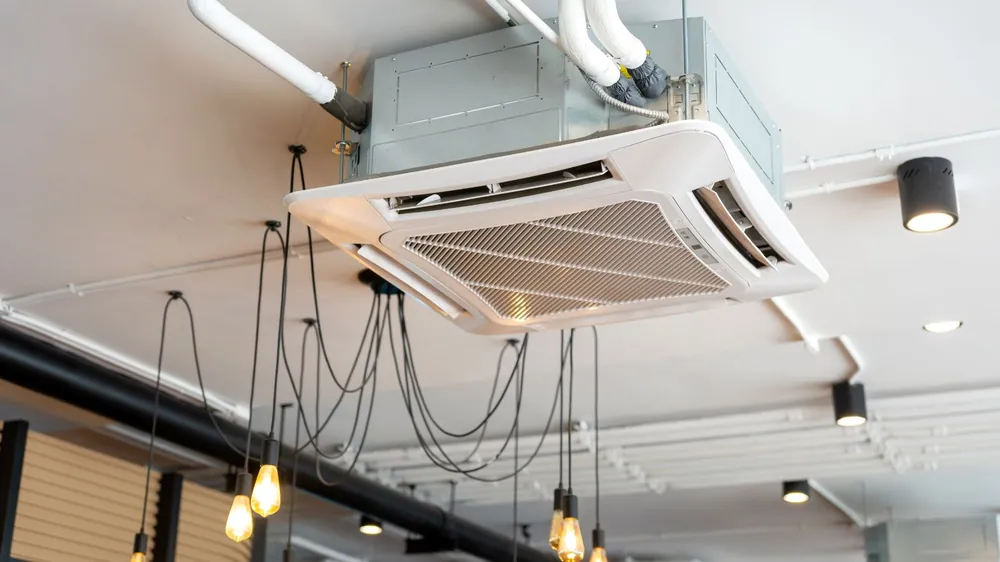
Because the air handler is often in an attic, closet or utility room, the water lands on insulation, a ceiling or a finished wall before anyone notices.
| Cause | Where the water appears | Fix owner |
|---|---|---|
| Clogged condensate line | Around the air handler or ceiling below | HVAC technician clears line. |
| Cracked or rusted drain pan | Attic floor, ceiling stain | HVAC technician replaces pan. |
| Frozen evaporator coil | Drip after the unit shuts off | HVAC technician finds cause. |
| Failed condensate pump | Overflow at pump or secondary pan | HVAC technician replaces pump. |
What to do when you find an AC leak
- Turn the system off at the thermostat. A frozen coil will melt faster with the fan only, but a pan overflowing needs the cooling stopped.
- Catch the water with a bucket or towels, and keep it away from electrical outlets.
- Photograph the leak, the stain and the unit.
- Call an HVAC technician to repair the cause and call us to dry the damage.
AC leak damage in your ceiling or closet?
Call to book an inspection. We will check how far the moisture went.
Drying and repair
We trace the moisture with meters and thermal imaging, then remove wet insulation and stained drywall where needed. Air movers and dehumidifiers dry the framing. Because the water is mostly condensation, it is relatively clean, but it still grows mold if left damp.
Our ceiling repair page explains the rebuild when the damage reaches finished surfaces.
AC leaks and mold
A leak in a warm, dark attic or closet makes a good place for mold. The Missouri Department of Health and Senior Services says to fix the water problem and dry wet items within 24 to 48 hours. If growth is already visible, see our mold remediation page.
Many callers describe mold in a closet or on a ceiling edge after an AC condensate problem. We treat the water source and the mold as one project, because cleaning mold without drying the structure only brings it back.
Summer in Ballwin
Cooling season is long enough in the St. Louis area that condensate lines work for months. A line that was clear in June can clog by August. An annual HVAC service that includes the condensate line is a cheap way to avoid the problem.
We do not repair air conditioners. Your HVAC technician fixes the equipment, and we dry and restore the building.
Insurance notes
Long-term leaks may be treated differently from sudden failures by insurers. Missouri DCI suggests documenting the damage and contacting your insurer promptly. Keep your HVAC invoice and photos.
Prevention
- Schedule HVAC service that includes the condensate line.
- Install a secondary pan with a float switch where an air handler sits above finished space.
- Change filters regularly so coils stay clean.
- Check the drain line outlet for flow in summer.
Standards behind this work
The EPA guidance on mold and moisture advises drying wet building materials within 24 to 48 hours to prevent growth. Condensate leaks are slow, so the ANSI/IICRC S500 approach of measuring moisture before deciding what to dry applies here.
Questions Ballwin homeowners ask
If water is actively pouring, call the 24/7 line. Most AC leaks are slower, and we can book an inspection at a convenient time. We cannot promise an arrival time.
Not if it is actively leaking. Turn it off and call an HVAC technician.
Stains that appear under an attic air handler or near a closet unit and grow in humid weather often point to condensate. A moisture meter and a technician can confirm it.
Not always. Drywall that stayed wet briefly may dry in place. Saturated or stained board is usually replaced.
No. An HVAC technician does. We handle the water damage.