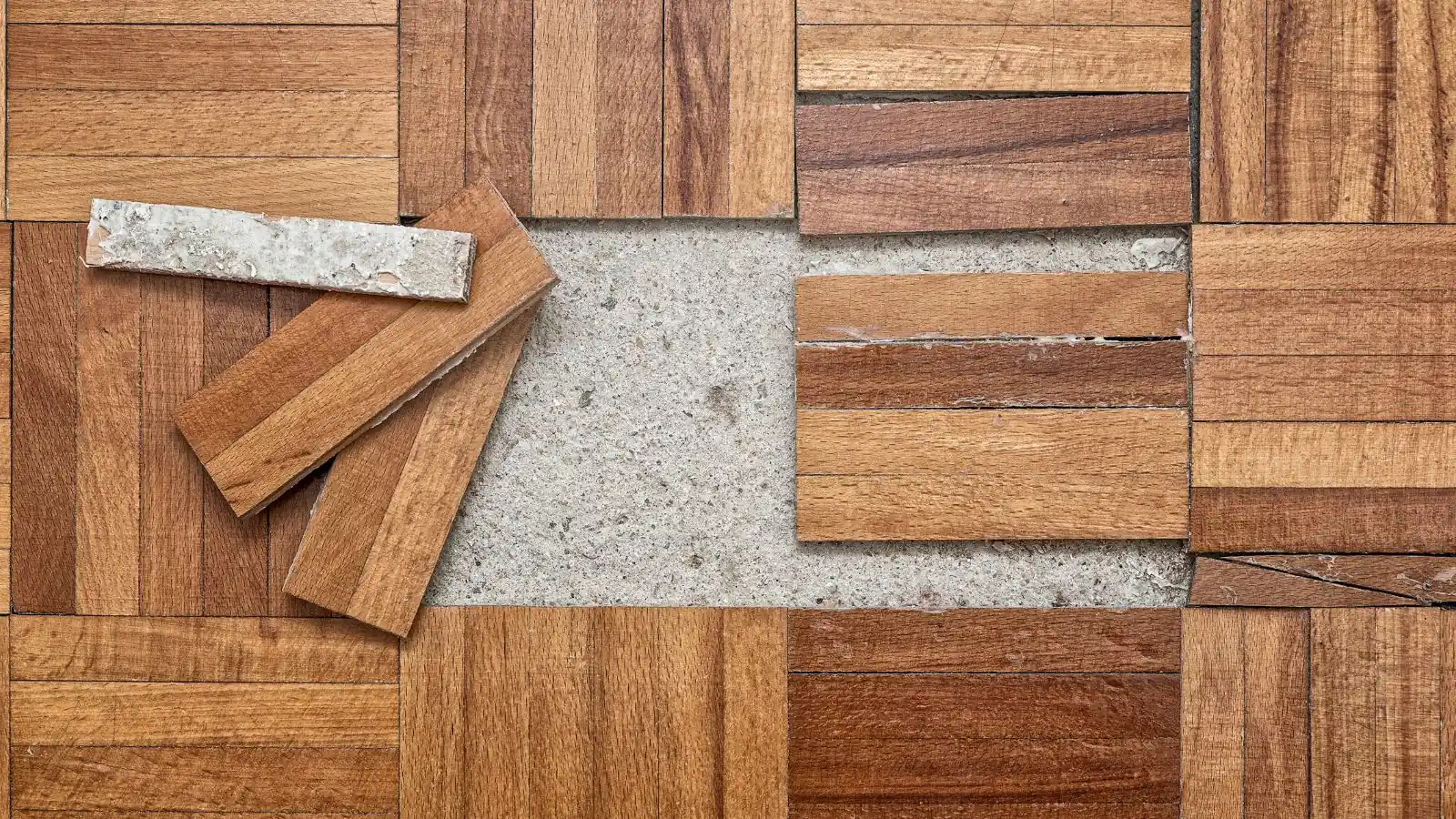
Hardwood absorbs water from the bottom and the edges, and then it swells. The sooner it is dried, the more of the floor can be saved. If water is spreading, call our 24/7 line. If a floor is just starting to cup, call to book an inspection.
Hardwood floor water damage repair is the drying, assessment and restoration or replacement of solid wood, engineered wood and laminate floors after water exposure. The material is the focus, not the source of the water.
What water does to a wood floor
Boards take on moisture and expand. Because the bottom absorbs more than the top, the edges rise and the board cups. If the swelling is blocked by neighboring boards, the floor can buckle and lift off the subfloor.
Finish helps on the surface, but water gets in through seams, edges and any wear in the coating. Moisture trapped between the boards and the subfloor is the real problem.
| Floor type | Reaction to water | Typical outcome |
|---|---|---|
| Solid hardwood | Cups, buckles, can be refinished after drying | Often saved if dried fast. |
| Engineered hardwood | Layers separate, edges swell | Depends on thickness of top layer. |
| Laminate | Core swells and does not recover | Usually replaced. |
| Vinyl plank | Water trapped underneath | Lifted for drying if possible. |
Drying a wood floor
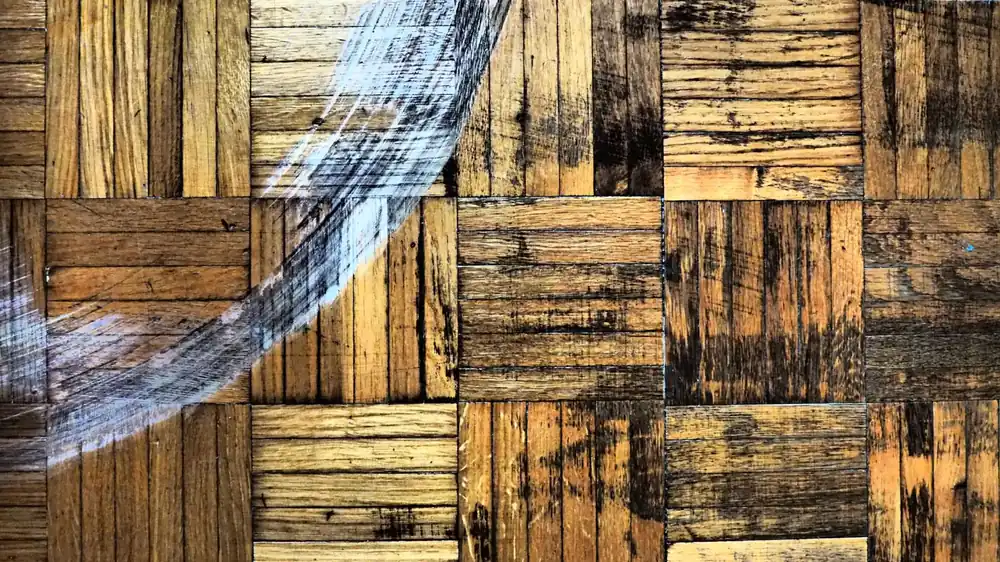
Surface water is removed first with hard floor extraction. Then we dry the boards with air movers and dehumidifiers. On hardwood, special drying mats or systems pull moisture out through the floor surface and may be used where the setup allows.
We monitor moisture in the boards and subfloor daily. A floor that looks flat can still have moisture below, so readings, not appearances, decide.
Wood floor soaked?
Call now to book an inspection or report an active leak.
Should you wait for the floor to flatten?
Many cupped floors flatten partly as they dry, and some do not. Sanding too early traps moisture and leaves the floor to cup again. We wait for readings to reach target before any refinish decision.
Callers often describe hardwood cupping after a leak or high humidity. Early drying is the most effective step you can take.
Repair options
- Dry in place and leave as is if readings and appearance are acceptable.
- Dry and sand and refinish after moisture levels stabilize.
- Replace damaged boards and blend into the existing floor.
- Replace the floor in full where the damage is widespread or the material cannot recover.
We scope the drying and tell you which option looks realistic. A flooring contractor handles installation and refinishing, and we coordinate the timing.
Where the water came from
Floors get wet from many sources. Slab leaks, dishwasher lines, washing machines and plumbing breaks are common. The source matters for your insurance and for the repair, so see slab leaks and appliance leaks. A flooded basement can also swell floors above it.
Insurance notes
The Missouri Department of Commerce and Insurance advises documenting damage and taking photographs before temporary repairs. Wood floor damage from a sudden leak is often addressed by homeowners policies, while long-term moisture or humidity problems may not be. Ask your agent about your policy.
What changes with the finish and the species
Thicker solid boards tolerate more drying and refinishing than thin engineered veneers. Some species move more with moisture than others. Pre-finished floors have beveled edges that trap water, while site-finished floors have a sealed surface that can slow water at the top but not at the sides.
We note the type, the thickness and the age of the floor when we scope the job.
Standards behind this work
ANSI/IICRC S500 is the published reference for drying structural materials, and wood flooring is one of the slowest materials it covers. Drying logs against a dry reference reading are how we decide between saving boards and replacing them.
What to do before we arrive
- Remove standing water with towels or a wet vacuum if the outlet is dry and safe.
- Lift rugs and furniture legs off the floor and place foil or plastic under legs.
- Keep the HVAC fan running at normal temperature and do not use heat guns or hair dryers on the boards.
- Do not try to seal or refinish wet wood.
Questions Ballwin homeowners ask
If water is actively flowing, call the 24/7 line. Otherwise book an inspection. We cannot promise an arrival time.
Often yes if it is dried quickly, but that depends on the species, thickness and how long it stayed wet.
After the boards and subfloor are dry and have stabilized. Time depends on the loss.
Usually not. The core swells and the planks do not recover.
Yes. Trapped moisture can grow mold. See our mold remediation page.