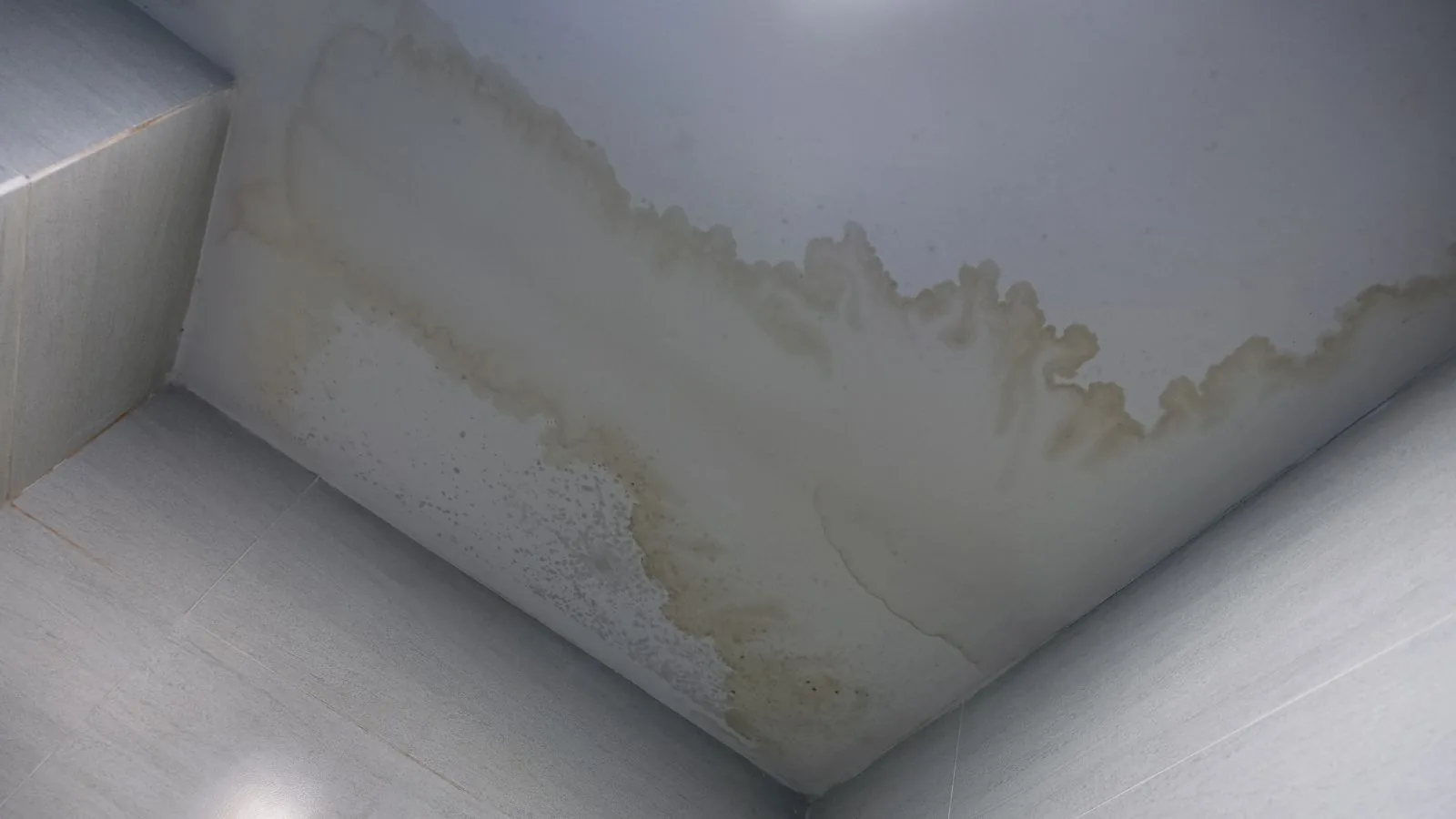
A bulging ceiling is an emergency because the water above it has weight, and wet drywall can fall without warning. Our line is open 24/7. Stay clear of the area below it while you read the steps that follow.
Ceiling water damage repair covers finding where water entered, removing wet insulation and drywall, drying the space and rebuilding the ceiling. The source can be a roof, an upstairs bathroom, a supply line or an attic HVAC unit.
Ceiling emergency: what to do right now
- Move people and valuables away from the area under the stain.
- Place a bucket under any drip and shut off the water if it comes from an upstairs fixture.
- If the ceiling is bulging, a small hole to release the water can reduce collapse risk, but only if you can do so safely. Otherwise leave it and call.
- Do not touch light fixtures or fans near wet areas. Turn off power at the panel only if you can reach it dry.
- Photograph the stain and call us.
Reading the stain
| What you see | Likely cause | Next step |
|---|---|---|
| Ring-shaped brown stain | Repeated wetting from a slow leak | Find the leak, dry the space. |
| Drip during rain | Roof or flashing leak | Roof check and cavity drying. |
| Stain below a bathroom | Supply, drain or tub seal failure | Plumber and drying. |
| Sagging or bulging | Water trapped in drywall | Release, remove, dry. |
| Stain with a musty smell | Long-term moisture and possible mold | Inspection, see mold page. |
Roof leaks and ceiling damage
A roof leak rarely appears directly under the hole. Water runs along rafters and decking before dripping onto insulation, then soaks through drywall. The visible stain may be several feet from the leak.
We trace the moisture path with meters and thermal imaging, then dry the attic and ceiling cavity. A roofer repairs the roof, and we handle the interior. Storm events that drive water through a roof are covered on our storm water damage page.
Spring is the wettest part of the Ballwin year, with the NWS St. Louis normals showing 4.82 inches in May, 4.73 in April and 4.49 in June. Roof flashing, skylight curbs and aging shingles are the usual weak points when that rain arrives.
Ceiling wet right now?
Keep clear of the area and call. We will tell you what to do and send a crew.
How we dry and repair a ceiling
Wet insulation holds water and sags, so it is removed from the affected area. Drywall that is soft, stained or sagging is cut out in sections rather than patched over. Cavities are dried with air movers and dehumidifiers described on our structural drying page.
After drying is verified, new drywall is hung, taped, textured and primed. Matching an existing ceiling texture takes care, and we tell you in advance what the finish will look like.
Mold above the ceiling
A leak that has been present for weeks can leave mold on the back of the drywall or on attic framing. The Missouri Department of Health and Senior Services says that indoor mold growth is a symptom of a water problem and that fixing the moisture source is the first step. See our mold remediation page if growth is visible.
Insurance notes
Missouri DCI recommends documenting damage and photographing it before temporary repairs, and keeping receipts. Roof leaks caused by storm damage are often handled under homeowners policies, while wear and tear is treated differently. Ask your agent about your own policy.
Attic and insulation
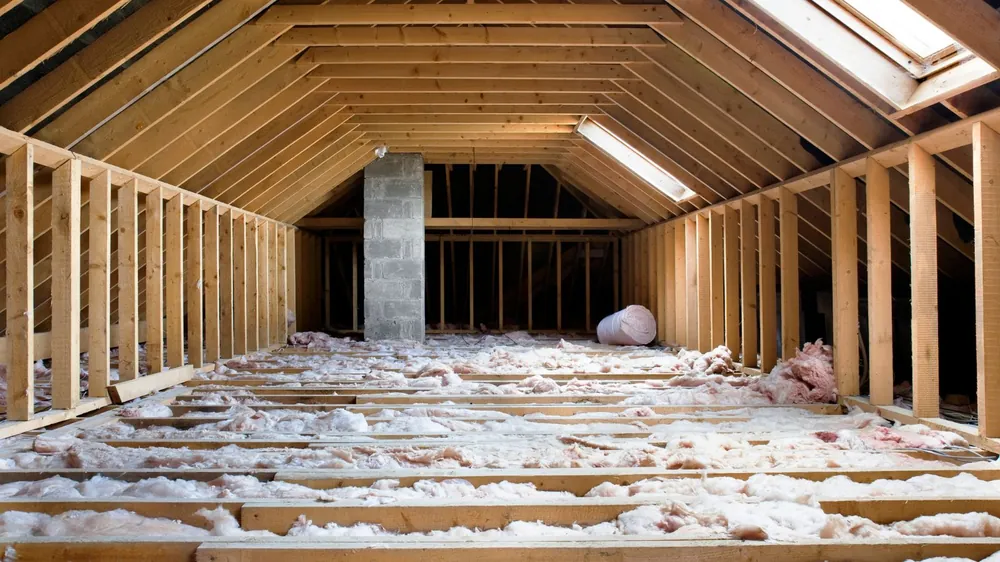
Attic insulation soaks up leaks and drips them slowly onto drywall. Wet blown-in insulation clumps and holds moisture, and wet batts sag. We evaluate it and remove what is saturated so the ceiling can dry from above and below.
Standards behind this work
The EPA recommends drying or removing wet materials within 24 to 48 hours to limit mold growth. ANSI/IICRC S500 guides how we test and dry the cavity above a wet ceiling, and when insulation and drywall should come out instead.
Questions Ballwin homeowners ask
Yes. Call the 24/7 line any time. We cannot promise arrival times, but we will help you with immediate safety steps and send a crew as soon as possible.
No. Keep people and pets out of the area. Water-heavy drywall can fall without warning.
No. A roofer fixes the roof. We handle the interior water damage, drying and ceiling repair.
Painting over a stain without fixing the source and drying the cavity usually brings the stain back and can hide mold.
Drying often takes a few days, followed by drywall, texture and paint. The total depends on size and how well the finish needs to match.