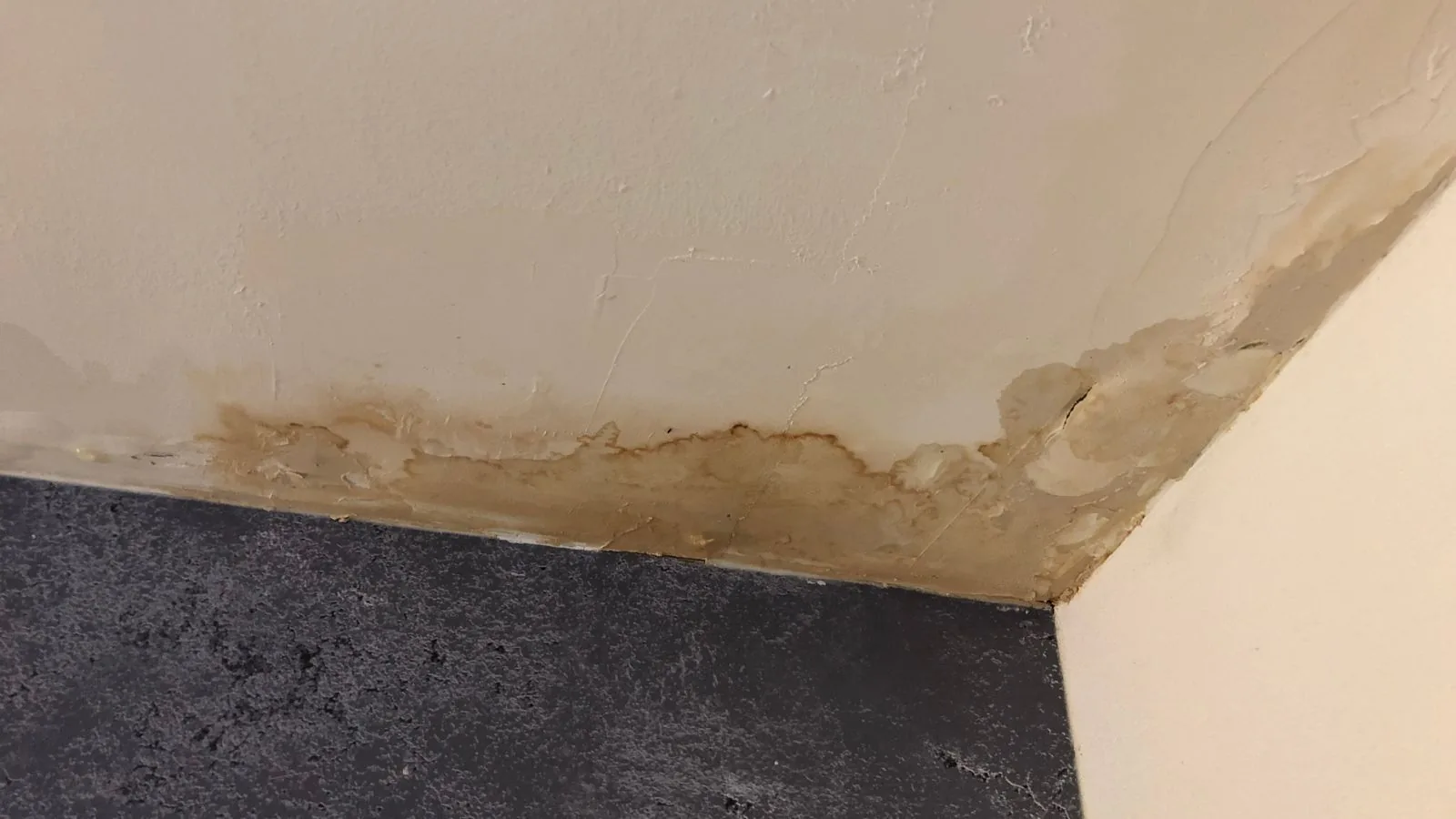
A slab leak is an emergency when water is visibly coming up or when you hear running water with everything off. Our line is open 24/7. Shut off the main and call.
Slab leak water damage is the harm done to flooring, walls and the building when a pipe in or beneath a concrete foundation slab leaks. It is rarer in homes with basements, so the mechanism matters more than any local frequency, and we state no local number.
How to recognize a slab leak
- A hot spot on the floor.
- The water meter spins when all fixtures are off.
- Sounds of running water in silence.
- Damp carpet, lifting laminate or cracked tile with no visible source.
- A sudden rise in the water bill.
Slab leak emergency steps
- Close the main water shutoff.
- Check the water meter to confirm the leak stops.
- Turn off power to wet rooms only if you can do so safely.
- Photograph floors, walls and baseboards.
- Call a plumber for leak detection, and call us for water removal and drying.
Homes with a basement or crawl space put plumbing in accessible joist space, not under concrete. If your home has a slab section such as an addition, a garage or a sunroom, this page may apply to that part of the building. Ask your building department or review your plans if you are not sure how your home was built.
Where slab leak water goes
Water rises through control joints, expansion cracks and the edges of the slab. It then wicks into baseboards and the bottom of walls, and it travels under flooring.
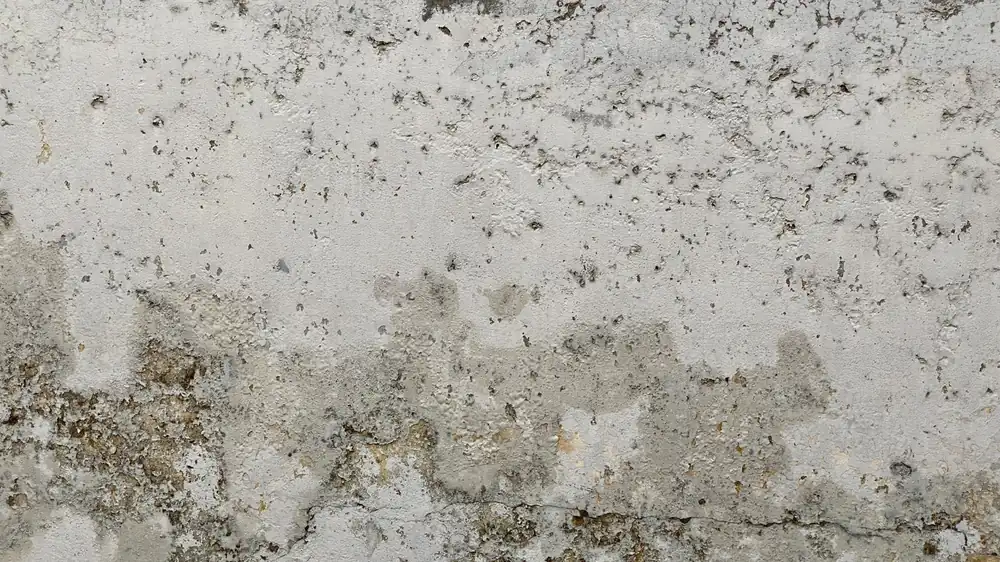
Because concrete is porous, it can hold water for a long time. Floors laid on a wet slab can cup, buckle or grow mold, so a dry-looking floor is no proof of a dry slab.
| Flooring | What happens | Likely response |
|---|---|---|
| Carpet and pad | Wicks up, stays damp | Lift, extract, dry or replace. |
| Laminate and engineered wood | Swells at seams | Often removed. |
| Solid hardwood | Cups and buckles | Dry quickly or replace, see hardwood page. |
| Tile | Grout and subfloor trapped moisture | Check under tile, dry slab. |
Suspect water under the floor?
Shut off the main and call. We will start on the water damage.
Restoration after leak detection
The plumber locates the leak with acoustic or thermal methods and repairs it by repiping, tunneling or accessing the slab. Our role begins at the surface: extract water, pull wet baseboards or flooring, dry the slab and walls and verify with meters.
We use air movers and LGR dehumidifiers on the structure, as explained on our structural drying page. Drying a concrete slab is slower than drying wood, so patience matters.
Insurance notes
Policies often treat the cost of reaching and repairing a leaking pipe differently from the resulting water damage. Missouri DCI recommends documenting the loss and calling your insurer promptly. Keep the plumber's leak detection report with your claim.
What we look for before we dry
A leak in or under a slab can send water along the underside of flooring for some distance before it appears. Before we set equipment, we scan the floor with a moisture meter and a thermal camera, then check walls, cabinets and doorframes for wicking.
We also look at the trim and the bottom of the drywall. Wicked moisture there often tells us how long the leak has been present.
Questions to ask the plumber
- Where is the leak and how was it found?
- Will the line be repaired or rerouted?
- Is the slab being opened, and how will the opening be patched?
- Is the repair work covered by a permit?
- Can I have a written report for my insurer?
Standards behind this work
ANSI/IICRC S500 is the published industry reference for assessing and drying wet materials, and it applies once the plumber has stopped the leak. Under it, readings are repeated on a schedule until materials reach their dry standard.
Questions Ballwin homeowners ask
Yes. The line is open 24/7. If water is visible, close the main and call. We cannot promise an arrival time.
We do not have a local figure to quote. They occur only in slab sections of a building, and many homes have basements instead. Ask your building department how your home was built.
A plumber finds and fixes the leak. We handle the damage the water caused.
Yes. Persistent dampness under flooring can lead to mold. See our mold remediation page.
Often longer than wood framing, and the time depends on the thickness and the conditions. Readings, not time estimates, tell us when it is dry.