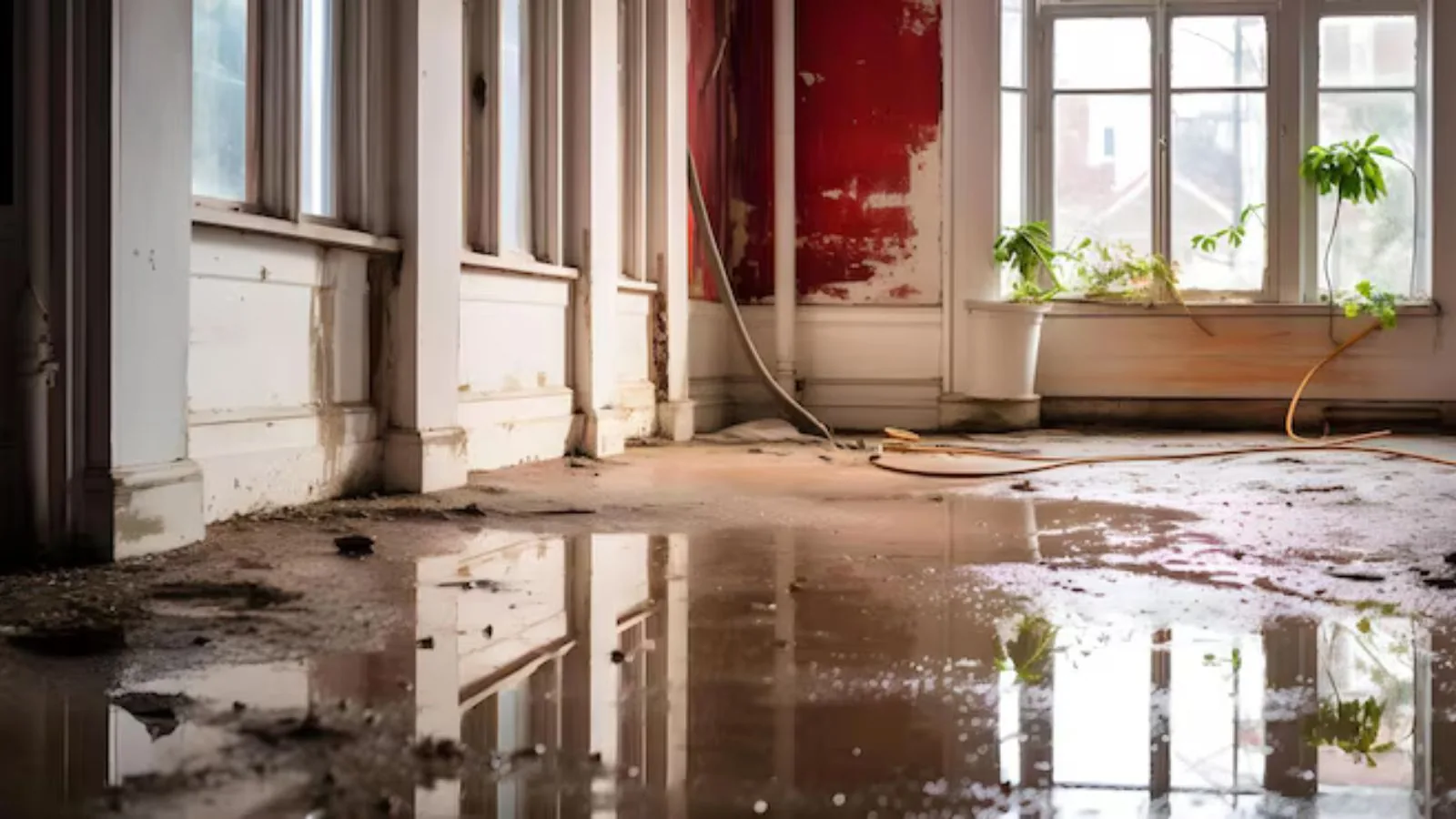
Floodwater is an emergency and a health hazard. It can carry sewage, soil and chemicals, so the first priority is safety. Our line is open 24/7, and the safety steps below come before cleanup.
Flood damage restoration is the removal of floodwater and silt, disposal of materials that cannot be cleaned, and structural drying after rising water enters a building. It differs from a pipe leak because the water arrives from outside and is usually contaminated.
Floodwater emergency: safety first
- Do not wade through deep water if the electrical panel, outlets or appliances may be energized. Call your electric utility or 911 for any electrical or gas risk before calling us.
- Do not touch floodwater with bare skin and keep children and pets out.
- Do not run a vacuum, fan or heater in wet areas.
- Do not drink tap water if local authorities have issued a notice.
Once the area is safe, photograph the waterline and damage, then call. We can tell you what to do next and send a crew.
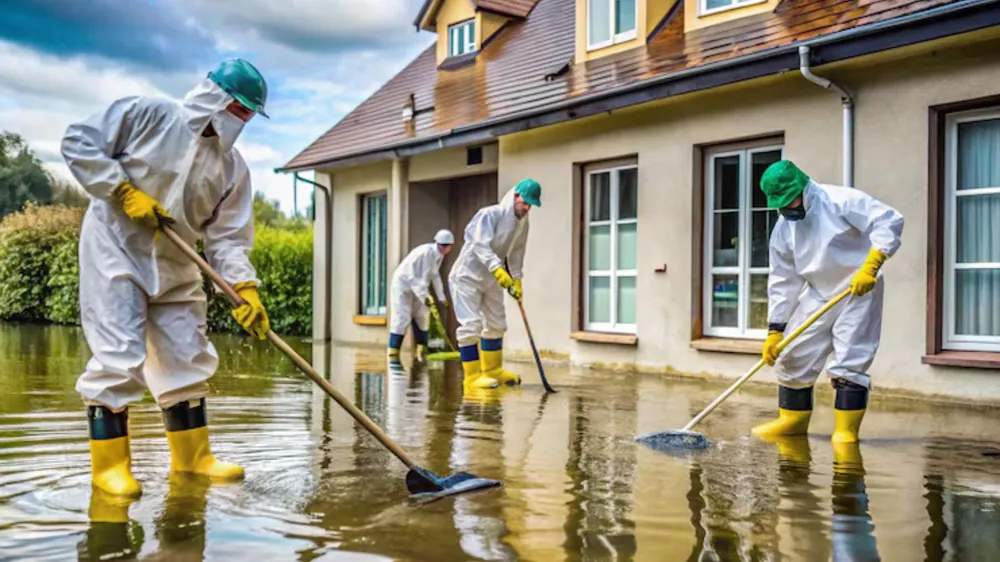
Why floodwater is treated as Category 3
Under the ANSI/IICRC S500 industry standard, water that comes from rivers, streams or the ground surface is grossly contaminated and treated as Category 3. Even if it looks clear, it can carry bacteria and silt.
That means porous materials it touched, such as carpet, pad, insulation and drywall at the waterline, are generally removed and discarded. Hard surfaces can be cleaned and disinfected.
| Material | Usual outcome | Why |
|---|---|---|
| Carpet and pad | Removed | Cannot be cleaned reliably. |
| Drywall and insulation below the waterline | Cut out and replaced | Absorbs contaminants. |
| Solid wood framing | Cleaned and dried | Structural, can be treated. |
| Concrete and tile | Cleaned and disinfected | Non-porous surfaces. |
| Upholstered furniture | Usually discarded | Porous material. |
Meramec River flooding and Ballwin
Ballwin is in southwest St. Louis County, not far from the Meramec River. The river flooded in December 2015, when it reached about 28 feet above flood stage at Eureka, and again in April 2017. A 44-foot levee built after the 1982 flood protects Valley Park.
Not every Ballwin address is near the river, and many floods here are surface runoff from heavy rain rather than river overflow. Check the FEMA Flood Map Service Center for your address, because we do not guess your flood zone. For neighboring areas, see our Valley Park, Fenton and Eureka pages.
Floodwater in your home?
Stay safe and call. We will explain what to expect and send a crew.
The flood cleanup sequence
- Safety check and utility shutoffs by qualified people.
- Water and mud removal with pumps and extractors.
- Removal of Category 3 materials and contents that cannot be saved.
- Cleaning and disinfection of surfaces that remain.
- Structural drying with air movers and dehumidifiers, see structural drying.
- Moisture verification, then rebuild planning.
Flood insurance is separate
Missouri DCI notes that flood damage is not typically covered by a standard homeowners policy and must be purchased separately. If you have flood coverage, contact that insurer promptly and document the loss. If not, rain entering through a roof or window may be treated differently, so ask your agent.
We keep photos and written scope to support whichever claim applies.
After the water recedes
Mud and silt are the hidden half of a flood. They dry into a film that holds moisture and bacteria against walls and floors, so removing it matters as much as removing the water. Crews shovel and wash down surfaces before drying begins.
Do not run the furnace or air conditioner until the ductwork has been checked. Floodwater can enter ducts and spread contamination through the house when the blower turns on.
Contents and belongings
Hard, non-porous items such as glass, metal and some plastics can usually be cleaned and disinfected. Upholstered furniture, mattresses, stuffed toys and particleboard furniture that sat in floodwater are generally discarded. Photograph items before you throw them away, because your claim may need an inventory.
Flood questions from Ballwin homeowners
Yes. The 24/7 line is staffed at all hours. Tell us the depth and whether the power is on, and we will advise on safety and dispatch as soon as we can.
Light, shallow cleanup with protective gear is sometimes possible, but deep or contaminated water is not a do-it-yourself job. Electrical hazards and Category 3 contamination are the main risks.
Flood damage involves rising water entering from outside. Storm damage involves rain or wind entering through the roof, windows or siding. See our storm water damage page.
Missouri DCI says flood damage typically requires separate flood coverage. Check your policy and call your agent.
Use the FEMA Flood Map Service Center or ask the City of Ballwin building department. We do not determine flood zones.