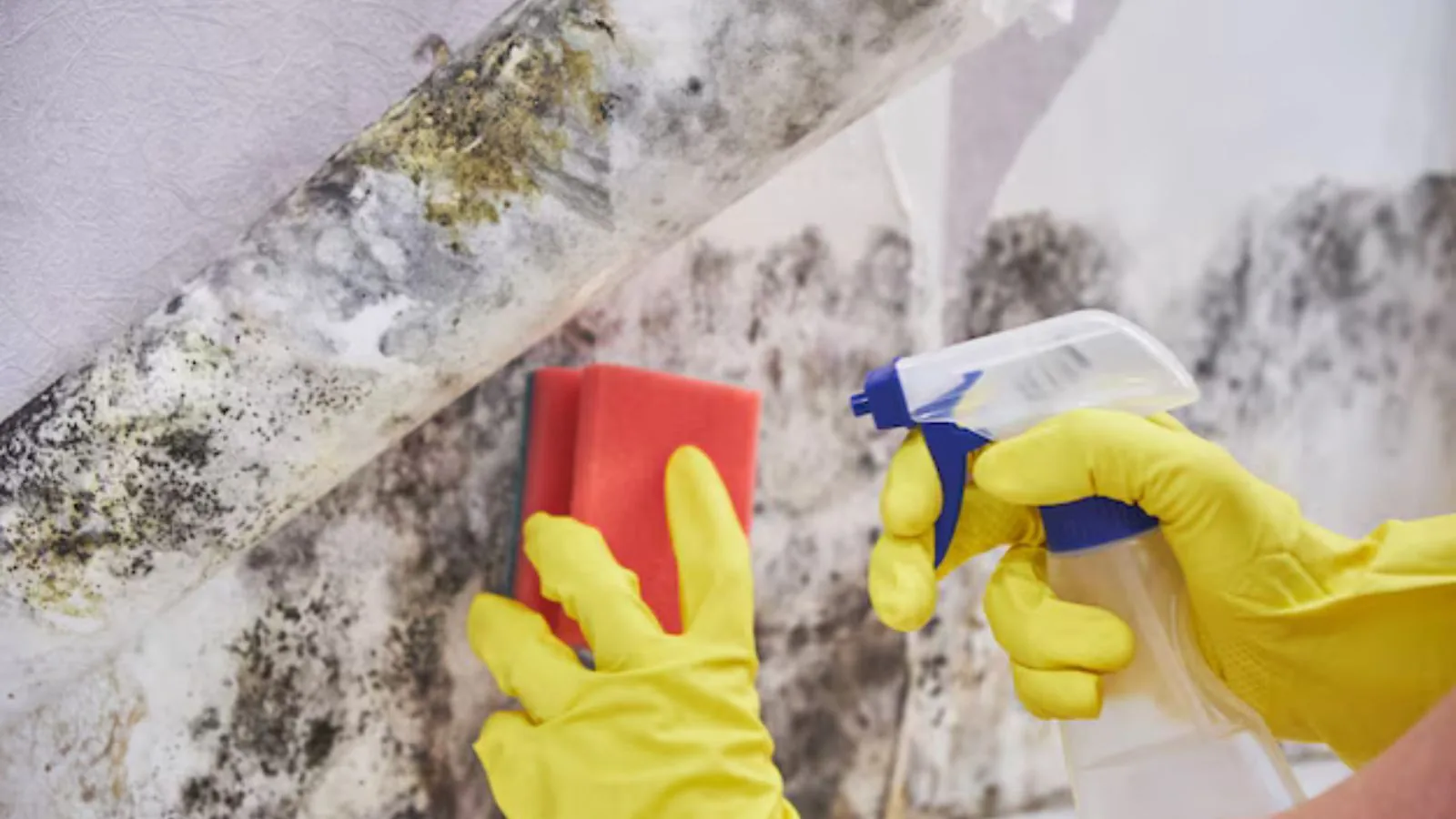
People use mold and mildew as if they were the same. In everyday use, mildew refers to flat, powdery growth on surfaces like shower walls, while mold often means thicker or fuzzier growth that can penetrate materials.
The difference matters less than the cause. Both signal moisture, and both need the moisture fixed.
What the two usually look like
| Feature | Mildew | Mold |
|---|---|---|
| Texture | Flat, powdery or downy | Fuzzy, slimy or raised. |
| Color | White, gray, yellow | Black, green, blue, brown. |
| Location | Shower walls, windowsills, fabric | Drywall, wood, carpet, insulation. |
| Depth | Surface growth | May penetrate porous material. |
| Cleaning | Often scrubbed from hard surfaces | May require material removal. |
These are general descriptions. Only a lab can identify species, and the Missouri DHSS says identification is not needed for cleanup.
Why the label is not the key
The Missouri Department of Health and Senior Services says cleanup methods are the same regardless of mold type and that sampling to identify it is usually unnecessary when growth is visible. The practical questions are where it is growing, what it is growing on and why the area is damp.
A powdery patch in a shower corner is a ventilation and cleaning problem. A fuzzy patch on drywall behind a bed is a moisture problem that may need removal of the board.
Where each tends to show up
- Bathrooms: shower corners, ceilings, grout lines.
- Windows: condensation on sills and frames.
- Closets: exterior wall corners and behind boxes.
- Basements: concrete walls, stored cardboard, stair undersides.
- Under sinks: cabinet panels and pipes.
What to do about it
- Wear a respirator, gloves and goggles.
- Scrub hard surfaces with detergent and water, then dry.
- Fix leaks and improve ventilation.
- Remove porous materials with growth.
- Monitor humidity and recheck in a few weeks.
DHSS describes a diluted bleach solution for hard surfaces and warns never to mix it with other cleaners. Larger growth belongs to professionals.
Humidity in St. Louis County homes
The NWS St. Louis normals show wet springs and cold winters. Winter air against cold exterior walls makes condensation, and summer humidity keeps bathrooms and basements damp.
Ballwin's 31,000 or so residents live in homes built in many different decades, so ventilation quality varies widely. Check bathroom fans, dryer vents and window seals if you see recurring spots.
When it is more than a surface problem
If the spots return after cleaning, if they appear on drywall or ceilings or if there is a musty smell with no visible source, there may be hidden moisture. Our structural drying process and mold remediation service address that.
Health
We do not give medical advice. DHSS notes that spores are a common allergen and that exposure can worsen asthma. Anyone with symptoms should contact a health care provider.
For nearby service, see our Fenton and Eureka pages.
Condensation versus leaks
Not every damp patch is a leak. Warm indoor air meets a cold surface and leaves a film of water. That is common on windows in winter and on cold exterior walls behind furniture.
A true leak shows up near a pipe, a roof edge or an appliance. If you cannot tell which you have, a moisture meter helps. Condensation responds to ventilation, while leaks do not.
Everyday prevention
- Run bathroom fans during and after showers.
- Vent the dryer outside.
- Keep furniture a few inches from exterior walls.
- Use a dehumidifier in damp basements.
- Wipe condensation from windows.
- Fix plumbing and roof leaks promptly.
Measuring humidity
An inexpensive hygrometer shows indoor humidity. Many sources suggest keeping indoor humidity moderate, and the EPA publishes guidance on that. If readings are often high, a dehumidifier or better ventilation can help.
We do not claim an exact target for every home because conditions differ.
When to call someone
Call a professional if growth covers more than a small patch, if it keeps coming back, if you smell mustiness without seeing a source or if there has been a recent leak or flood. Our team can inspect, dry and remove affected materials as described on the mold remediation page.
A short case study in words
A homeowner notices gray fuzz on the bottom of a basement wall behind a stack of boxes. The boxes held moisture against the wall, and the wall was cold. The fix was to move the boxes, run a dehumidifier, clean the surface and improve airflow.
A different homeowner finds the same gray fuzz on a closet wall that shares a wall with an upstairs bathroom. The wall was wet from a slow leak at the tub drain. The fix there was to repair the drain, dry the wall and replace damaged drywall. The same look had two different causes.
Cleaning checklist for mildew on hard surfaces
- Open a window or run the exhaust fan.
- Wear gloves and goggles, and a respirator for larger patches.
- Wash with detergent and water, scrubbing gently.
- Rinse and dry completely.
- Check caulk and grout and replace if cracked.
- Recheck in a week.
If the area is soft, stained through or keeps returning, stop cleaning and call for an inspection. The problem is probably moisture behind the surface.
Why identification rarely changes the plan
Labs can name species, but the cleanup steps stay the same. Fix the moisture, protect yourself, remove what cannot be cleaned and dry everything. Spending money on identification delays the one thing that matters, which is drying the area and removing the cause.
If someone in the home has a serious health condition, talk to a doctor about what steps make sense for that person.
Fabric, books and stored items
Mildew often shows first on leather shoes, books, curtains and cardboard boxes in humid rooms. Move these items to a drier space, clean what you can and discard what stays musty. Store keepsakes in plastic bins with a moisture absorber rather than in cardboard.
Check back after a week to see whether the problem returns. Recurrence means the room itself is too damp, and a dehumidifier or better ventilation is the next step.
Standards behind this work
The CDC and EPA guidance on mold does not require you to tell mold from mildew before acting. Both are treated by fixing moisture and cleaning, and ANSI/IICRC S520 covers larger remediation.
Common questions
The terms overlap. DHSS says treat both as moisture problems and clean or remove them the same way.
Not reliably. Color varies with species and material.
DHSS says sampling is usually unnecessary when growth is visible.
Usually humidity and poor ventilation. Run the fan, fix leaks and clean regularly.
Condensation on cold windows is common, and it supports growth. Reduce humidity and wipe the sills.