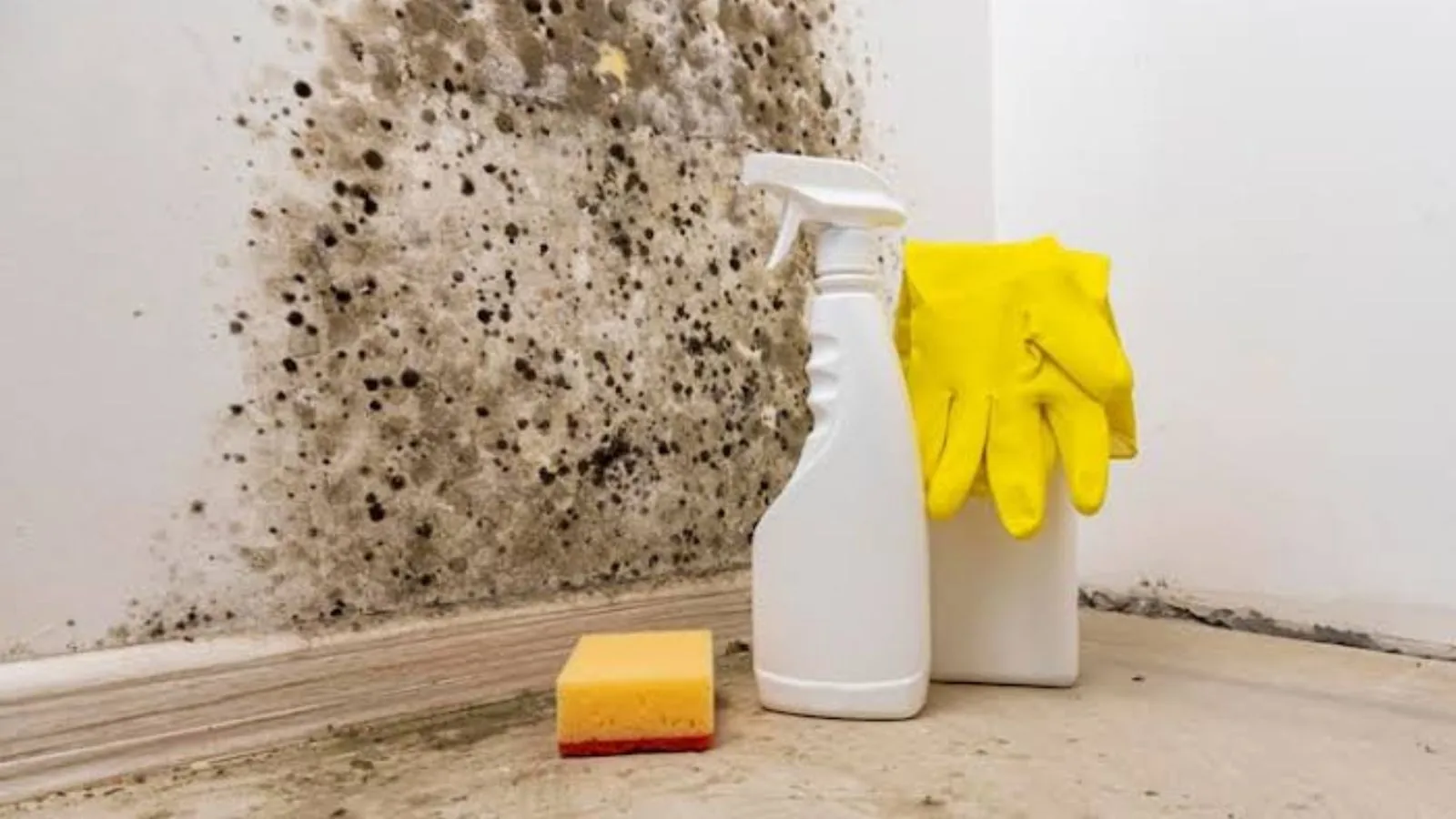
Mold clean up works only when the water source is fixed. Scrubbing a wall while the pipe behind it still leaks is a way to spend a weekend and see the mold return.
This guide uses guidance from the Missouri Department of Health and Senior Services to explain what homeowners can clean themselves, what to wear and when to bring in a professional.
Step one: find and fix the water
The Missouri Department of Health and Senior Services says indoor mold growth is a symptom of a water problem. Plumbing leaks, roof leaks, flooding, large spills and high humidity all create the conditions mold needs.
Before cleaning, find the source. If you cannot, a moisture meter and a thermal camera can help, and our structural drying process is designed to dry the structure afterward.
What you can clean yourself
DHSS guidance says hard surfaces can be scrubbed with detergent and water and then dried. If bleach is used, the department recommends a solution of one part bleach to ten parts water and warns never to mix bleach with other cleaners. Do not paint or caulk over moldy surfaces until they are cleaned and dried.
Small patches on tile, glass, metal or sealed surfaces are the usual homeowner jobs.
Protect yourself
- An N-95 respirator.
- Gloves.
- Goggles without ventilation holes.
- Plastic sheeting to isolate a small area and bags for discarded items.
What usually needs professional help
| Situation | Usual choice |
|---|---|
| Small surface patch on tile or sealed surface | Homeowner with protection. |
| Mold on drywall, insulation or ceiling tile | Remove and replace, often professional. |
| Large area or repeated growth | Professional remediation. |
| Musty smell with no visible source | Inspection. |
| Mold after sewage or flood water | Professional. |
| Anyone in the household with asthma or allergies | Professional or temporary relocation of the person. |
Porous materials such as drywall, carpet and insulation that are moldy or were soaked with contaminated water are typically discarded. DHSS notes that if porous items do not dry quickly they should be discarded if they show mold or water damage.
Drying is part of clean up
Cleaning removes growth, and drying removes the reason for it. DHSS recommends drying wet items within 24 to 48 hours, and a closet wall that stays damp grows mold again. That is why we recommend moisture checks before any rebuild.
Ballwin weather and indoor moisture
St. Louis NWS 1991 to 2020 normals show about 41.70 inches of precipitation a year, with spring the wettest season. Warm, wet weather is when closets, basements and bathrooms hold moisture.
If you recently had a roof leak, an AC condensate overflow or a sink leak, look in closets, behind furniture and in corners where air does not move. Those are the places callers tell us they find growth.
Do not
- Do not mix bleach with other cleaners.
- Do not dry-brush or blow mold with a fan.
- Do not paint over it.
- Do not disturb large areas without containment.
- Do not ignore the source.
When to call us
If the mold covers more than a small area, if it is on drywall or ceilings, or if you are not sure where the water came from, book an inspection through our mold remediation team. We explain the scope and how the price is set before work starts.
For nearby areas, see our pages for Fenton and Valley Park.
Health
We do not give medical advice. DHSS notes that airborne mold spores are a common allergen and that excessive exposure can worsen asthma. Anyone with symptoms should contact a health care provider.
A simple homeowner checklist
- Confirm the leak or humidity source is stopped.
- Open windows or run a dehumidifier to lower moisture.
- Put on a respirator, gloves and goggles.
- Cover nearby furniture and seal doorways with plastic if you can.
- Clean hard surfaces with detergent and water, then dry them completely.
- Bag removed materials before carrying them through the house.
- Wash your hands and change clothes after the job.
Cleaning different surfaces
| Surface | General approach |
|---|---|
| Tile and grout | Scrub with detergent and water, dry. |
| Painted wood | Scrub gently, dry thoroughly, check for softness. |
| Unfinished wood framing | Dry and clean, a professional may sand or treat. |
| Drywall with growth | Cut out and replace. |
| Carpet and pad | Usually removed if moldy. |
| Fabric and cardboard | Discard if moldy. |
If wood is soft or crumbly, rot may be present, and a contractor should check the structure. Do not paint or caulk until the surface is clean and dry, as the Missouri DHSS advises.
After the clean up
Watch the area for several weeks. If the stain, smell or growth returns, there is still moisture. A moisture meter reading can reveal hidden dampness behind the surface.
Keep humidity moderate with a dehumidifier in damp rooms, run exhaust fans and fix gutters and grading that send water toward the house. Small habits stop most repeat problems.
Clean up after flooding or sewage
Flood and sewage water create a bigger problem than a leak because the water itself is contaminated. DHSS notes that porous items affected by sewage backups or floods should probably be discarded. That is a job for trained crews, and our flood damage page and sewage backup page explain the process.
Mistakes that make mold worse
The most common mistake is cleaning without fixing the water. The second is using a fan to blow across moldy surfaces, which pushes spores into other rooms. The third is painting over growth to make it look better for a few weeks.
Another mistake is throwing away a moldy item without sealing it first. Bag it, close the bag and carry it straight out. Do not drag it across clean carpet.
Keeping a cleaning log
Write down what you cleaned, the date, what you used and what you threw away. If mold comes back or you ever need to explain the history to an insurer or a buyer, a simple log helps. Photos before and after take a minute and are worth the effort.
Standards behind this work
The EPA publishes a guide to mold, moisture and your home, and it says to dry wet materials within 24 to 48 hours. ANSI/IICRC S520 is the published standard that professional mold remediation is measured against.
Common questions
DHSS describes a one part bleach to ten parts water solution for hard surfaces and warns not to mix bleach with other cleaners. Porous materials usually need removal.
DHSS says that if visible mold is present, sampling is usually unnecessary.
Small hard-surface patches often are, with protective gear. Larger or hidden mold is better left to professionals.
Usually because moisture was not fixed or materials were not dried fully.
It signals moisture, which can lead to mold. Check humidity, leaks and drainage, and read the Missouri DHSS guidance on controlling moisture.