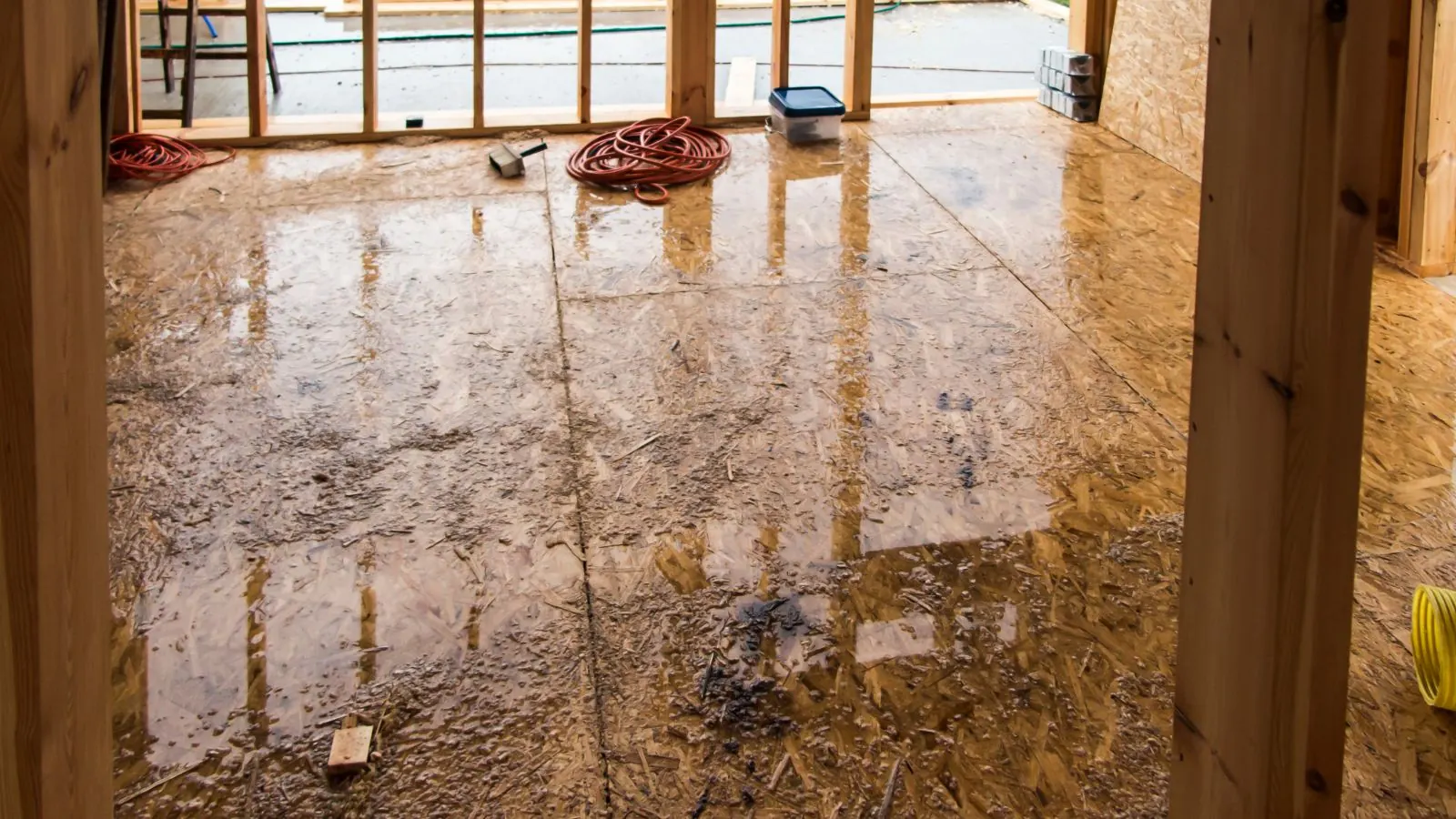
A hidden leak is any water loss you cannot see, such as a line in a wall, under a floor or above a ceiling. They often show up first as a high water bill, a musty smell or a stain that appears from nowhere.
This guide walks through the do-it-yourself checks and when to bring in a professional.
Check the water meter
- Turn off every fixture and appliance that uses water.
- Look at the meter and note the reading or the small leak indicator.
- Wait 30 minutes without using water.
- Check again. If the number moved or the indicator spins, water is escaping somewhere.
Close the main shutoff and check again. If the meter stops, the leak is inside the house. If it continues, the leak is between the meter and the house.
Check fixtures and appliances
- Toilet: add a few drops of food coloring to the tank and see if color shows in the bowl without flushing.
- Faucets and shutoff valves: look for drips or corrosion.
- Dishwasher, washer and refrigerator lines: inspect hoses and floors around them.
- Water heater: check for moisture, rust or a puddle.
- Hose bibs and irrigation lines.
Look for symptoms
| Symptom | Likely location | Next step |
|---|---|---|
| Ceiling stain | Upstairs bathroom, roof, attic HVAC | Check above, meter reading. |
| Musty smell in a room | Wall cavity, under flooring | Moisture meter. |
| Warm spot on floor | Hot water line under slab | Plumber leak detection. |
| Bubbling paint | Wall cavity leak | Meter and thermal imaging. |
| Sound of running water | Anywhere in the system | Meter test, listening. |
| High water bill | Anywhere | Meter test. |
What professionals add
Moisture meters read dampness in drywall and wood. Thermal cameras show cooler areas created by evaporation. Acoustic listening tools can pick up pressurized leaks, and a plumber uses pressure tests and leak detection equipment.
We map moisture and document where it is, then your plumber fixes the pipe. For the drying that follows, see structural drying.
Seasonal leaks in the St. Louis area
The NWS St. Louis January normal low is 23.8 degrees, so freeze and thaw cycles can create slow leaks that show up in late winter. Spring rain, with 4.82 inches normal in May, shows up as roof and window leaks.
If a stain appears after a cold snap, think pipes. If it appears after a storm, think roof, flashing or gutters.
Do not ignore small signs
A hidden leak can run for weeks. The Missouri Department of Health and Senior Services says dry wet items within 24 to 48 hours to limit mold, and a hidden leak never gets that chance.
If you see mold, read our mold remediation page.
Who to call
- Plumber for the pipe or fixture.
- Roofer for a roof leak.
- HVAC technician for condensate problems.
- Restoration company for wet materials, mapping and drying.
See our burst pipe and slab leak pages for more on pipe sources. For nearby service, visit Valley Park and Saint Ann.
Room by room walk-through
| Room | Check |
|---|---|
| Kitchen | Under sink, dishwasher edges, refrigerator line, floor near cabinets. |
| Bathroom | Toilet base, tub caulk, under vanity, ceiling below. |
| Laundry | Washer hoses, drain pan, floor around the machine. |
| Basement or crawl space | Pipes, water heater, sump pit, joists. |
| Attic | Roof deck, HVAC drain pan, insulation. |
| Exterior | Hose bibs, downspouts, grading. |
Using your senses
Look for staining, warped trim or paint that bubbles. Listen for hissing or running sounds in quiet rooms. Smell for mustiness. Touch baseboards and carpet edges for dampness.
Early signs are subtle. A baseboard that feels cool or a carpet corner that is slightly damp is worth following up.
What to do once you find it
- Shut off water to the area or the main.
- Photograph the leak and surrounding damage.
- Call a plumber or the right trade.
- Call a restoration company if materials are wet.
- Contact your insurer if the damage is significant.
Preventive habits
- Check under sinks every few months.
- Replace old supply hoses.
- Test the water heater area annually.
- Know where the main shutoff is.
- Consider leak sensors in high-risk spots.
Special cases: irrigation and outdoor lines
Not every hidden leak is inside. A sprinkler zone with a cracked line or a hose bib that drips inside a wall can waste water for months. If your meter test shows a leak but you cannot find it inside, look at outdoor spigots, irrigation valves and any detached building that shares your service.
A plumber can isolate sections of the system with shutoff valves and pressure tests. That narrows the search from the whole property to one pipe run.
When the leak is above you
In a condo, townhome or apartment, a leak in a neighboring unit can show up on your ceiling. Tell the manager or association right away, and photograph the stain. Ask them to find the source and to dry the area. We can help with drying and documentation.
What a professional leak search looks like
A professional leak search is methodical. The technician reviews the history, reads the meter, checks fixtures and uses a moisture meter and thermal camera to follow clues. Acoustic tools or a tracer gas may confirm the exact point for hidden pressurized lines.
The goal is to open as little as possible. A small access hole in the right spot beats a large guess. We document the wet area, and the plumber repairs the pipe.
Using your water bill as a clue
Compare the last few bills with the same months last year. A steady rise with no change in use is a good reason to run the meter test. Many utilities show usage in tables or charts online, which makes patterns easier to see.
Contact your water utility if you cannot read the meter or if the numbers do not add up.
Do not forget the water heater and softener
Water heaters, softeners and filtration systems all have fittings that can weep. Check the base of each unit and the floor drain nearby. A small puddle under a unit is worth a call to a plumber before it becomes a flood.
Standards behind this work
The EPA WaterSense program publishes guidance on finding household leaks, including checking your water meter before and after a period with no water use. Use it before calling a plumber.
Common questions
A meter test shows whether water is escaping, and a moisture meter and thermal camera pinpoint the wall. A plumber confirms the pipe.
Yes. Under-slab or in-wall leaks may not show for some time.
A warm spot on the floor or running water sounds are clues. See our slab leak page.
They can help find some leaks, but a professional is more reliable.
No. Irrigation, guests and seasonal use also raise bills. A meter test settles it.